
Newsletter Subscribe
Enter your email address below and subscribe to our newsletter

Schedule for the 2026 season
Schedule for the 2026 season

First Grand Prix: 1996
Lap Record: 1:20.260 (2022)
Lap Length: 5.278 km
Race Distance: 58 laps (306.124 km)
DRS Zones: 2
Turns: 14
Top Speed: 330 km/h
Average Speed: 240 km/h

Albert Park is a semi-permanent street circuit known for its fast, flowing corners and evolving grip levels throughout the weekend. The slightly uneven asphalt and temporary racing surface mean tyre warm-up is challenging early in sessions, while strong winds around the lake can destabilize cars under braking.
The track rewards high-confidence drivers who can extract performance during rapid transitions, especially through Turns 1-3 and the high-speed chicane at Turns 9-10. Overtaking is traditionally difficult, but the extended DRS zones has improved raceability in recent years, creating strategic battles around pit stop timing and medium-to-hard tyre management.

First Grand Prix: 1996
Lap Record: 1:20.260 (2022)
Lap Length: 5.278 km
Race Distance: 58 laps (306.124 km)
DRS Zones: 2
Turns: 14
Top Speed: 330 km/h
Average Speed: 240 km/h
Albert Park is a semi-permanent street circuit known for its fast, flowing corners and evolving grip levels throughout the weekend. The slightly uneven asphalt and temporary racing surface mean tyre warm-up is challenging early in sessions, while strong winds around the lake can destabilize cars under braking.
The track rewards high-confidence drivers who can extract performance during rapid transitions, especially through Turns 1-3 and the high-speed chicane at Turns 9-10. Overtaking is traditionally difficult, but the extended DRS zones has improved raceability in recent years, creating strategic battles around pit stop timing and medium-to-hard tyre management.

First Grand Prix: 2004
Lap Record: 1:32.238 (2004)
Lap Length: 5.451 km
Race Distance: 56 laps (305.066 km)
DRS Zones: 2
Turns: 16
Top Speed: 330 km/h
Average Speed: 240 km/h
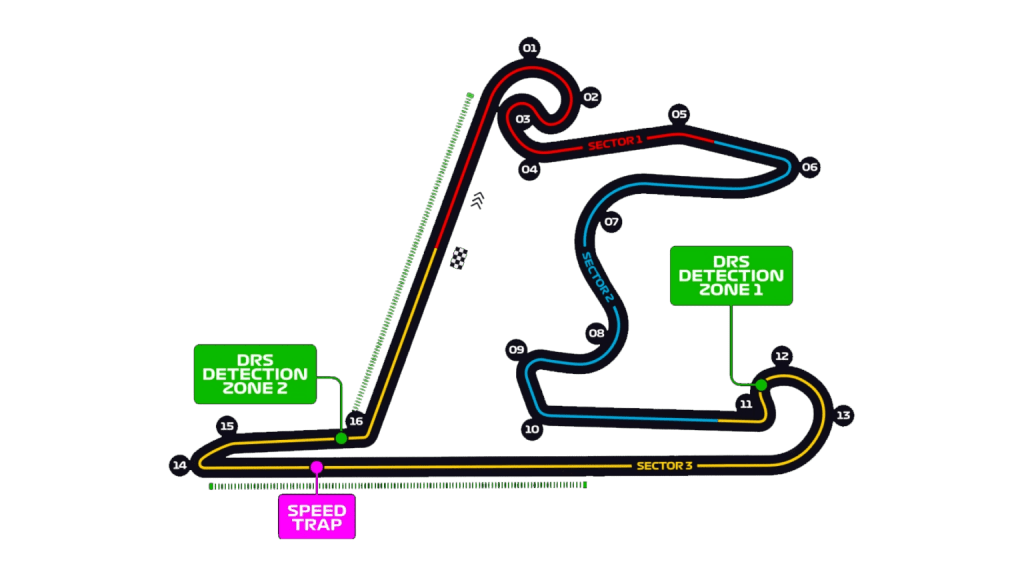
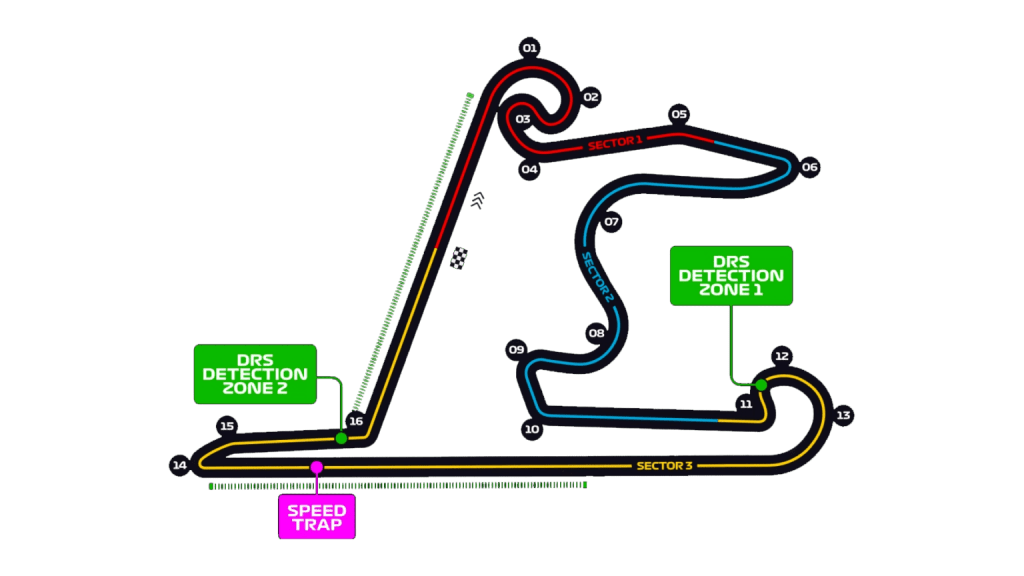
Shanghai International Circuit combines high-speed straights with a blend of flowing corners and technical sections that reward both raw pace and strategic precision. The long back straight (over 1 km), makes top-end speed and slipstreaming crucial, especially at Turn 14, one of the best overtaking spots. Meanwhile, the tight technical Turns 1-4 and the mid-sector chicanes demand aerodynamic balance and car stability under braking.
The wide run-off areas give some margin for error, but the walls are close enough around the narrow sections to keep risk high, especially in wet or slippery conditions. For tyre strategy, the long straights stress the rears, while the stop-start corners stress front grip. Teams often balance towards medium-soft compounds with aggressive brake cooling setups.

First Grand Prix: 2004
Lap Record: 1:32.238 (2004)
Lap Length: 5.451 km
Race Distance: 56 laps (305.066 km)
DRS Zones: 2
Turns: 16
Top Speed: 330 km/h
Average Speed: 240 km/h
Shanghai International Circuit combines high-speed straights with a blend of flowing corners and technical sections that reward both raw pace and strategic precision. The long back straight (over 1 km), makes top-end speed and slipstreaming crucial, especially at Turn 14, one of the best overtaking spots. Meanwhile, the tight technical Turns 1-4 and the mid-sector chicanes demand aerodynamic balance and car stability under braking.
The wide run-off areas give some margin for error, but the walls are close enough around the narrow sections to keep risk high, especially in wet or slippery conditions. For tyre strategy, the long straights stress the rears, while the stop-start corners stress front grip. Teams often balance towards medium-soft compounds with aggressive brake cooling setups.

First Grand Prix: 1987
Lap Record: 1:30.983 (2019)
Lap Length: 5.807 km
Race Distance: 53 laps (307.471 km)
DRS Zones: 1
Turns: 18
Top Speed: 330 km/h
Average Speed: 230 km/h

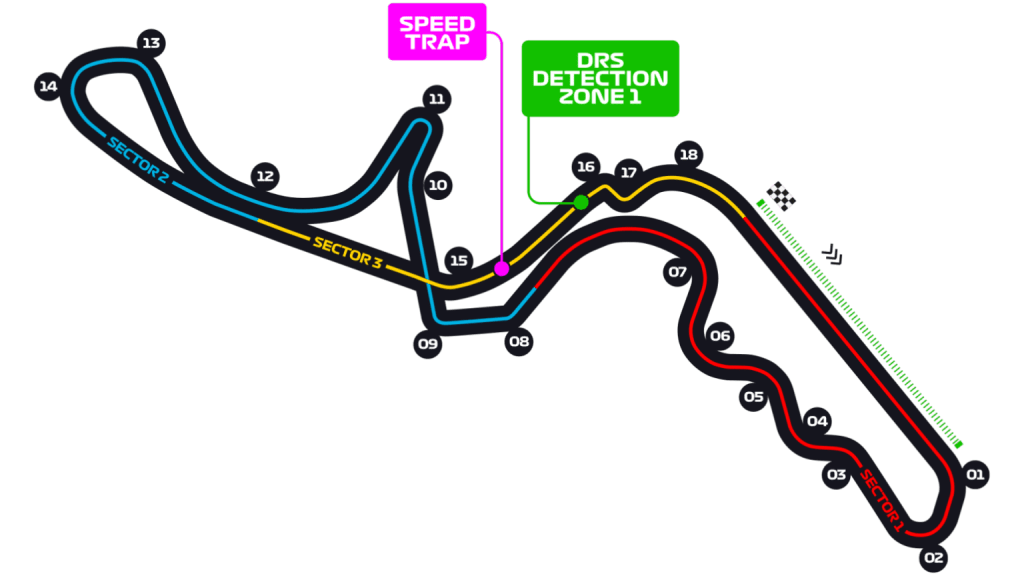
Suzuka is one of the most demanding driver circuits. A fast, flowing figure-eight layout that rewards precision, commitment, and aerodynamic balance. The S-Curves in Sector 1 punish instability, while Degner, Spoon, and 130R push both bravery and car stability to the limit. Narrow runoff areas amplify mistakes, especially in windy or wet conditions that frequently affect race weekends.
Overtaking is possible into Turn 1 and the final chicane with DRS assistance, but qualifying remains critical due to Suzuka’s technical nature. High lateral loads and abrasive asphalt place heavy stress on tires, often pushing teams toward multi-stop strategies and conservative management during long stints.

First Grand Prix: 1987
Lap Record: 1:30.983 (2019)
Lap Length: 5.807 km
Race Distance: 53 laps (307.471 km)
DRS Zones: 1
Turns: 18
Top Speed: 330 km/h
Average Speed: 230 km/h
Suzuka is one of the most demanding driver circuits. A fast, flowing figure-eight layout that rewards precision, commitment, and aerodynamic balance. The S-Curves in Sector 1 punish instability, while Degner, Spoon, and 130R push both bravery and car stability to the limit. Narrow runoff areas amplify mistakes, especially in windy or wet conditions that frequently affect race weekends.
Overtaking is possible into Turn 1 and the final chicane with DRS assistance, but qualifying remains critical due to Suzuka’s technical nature. High lateral loads and abrasive asphalt place heavy stress on tires, often pushing teams toward multi-stop strategies and conservative management during long stints.

First Grand Prix: 2004
Lap Record: 1:31.447 (2005)
Lap Length: 5.412 km
Race Distance: 57 laps (308.237 km)
DRS Zones: 3
Turns: 15
Top Speed: 330 km/h
Average Speed: 215 km/h

Bahrain International Circuit is a braking-heavy, traction-critical venue that rewards cars with strong ear stability and efficient straight-line performance. The layout features multiple long straights followed by tight corners, putting severe stress on rear tires and making thermal degradation a decisive factor, especially under high evening temperatures and shifting desert winds.
Turn 1 and Turn 4 create two of the best overtaking zones on the calendar, supported by long DRS runs that enable close racing and multi-lap battles. Strategy is typically varied, with two-stop and three-stop approaches both viable depending on track evolution and Safety Car timing. With sand on the surface early in the weekend and large braking zones throughout the lap, Bahrain consistently produces high-variance and strategically rich racing.


First Grand Prix: 2004
Lap Record: 1:31.447 (2005)
Lap Length: 5.412 km
Race Distance: 57 laps (308.237 km)
DRS Zones: 3
Turns: 15
Top Speed: 330 km/h
Average Speed: 215 km/h
Bahrain International Circuit is a braking-heavy, traction-critical venue that rewards cars with strong ear stability and efficient straight-line performance. The layout features multiple long straights followed by tight corners, putting severe stress on rear tires and making thermal degradation a decisive factor, especially under high evening temperatures and shifting desert winds.
Turn 1 and Turn 4 create two of the best overtaking zones on the calendar, supported by long DRS runs that enable close racing and multi-lap battles. Strategy is typically varied, with two-stop and three-stop approaches both viable depending on track evolution and Safety Car timing. With sand on the surface early in the weekend and large braking zones throughout the lap, Bahrain consistently produces high-variance and strategically rich racing.

First Grand Prix: 2021
Lap Record: 1:30.734 (2021)
Lap Length: 6.174 km
Race Distance: 50 laps (308.450 km)
DRS Zones: 3
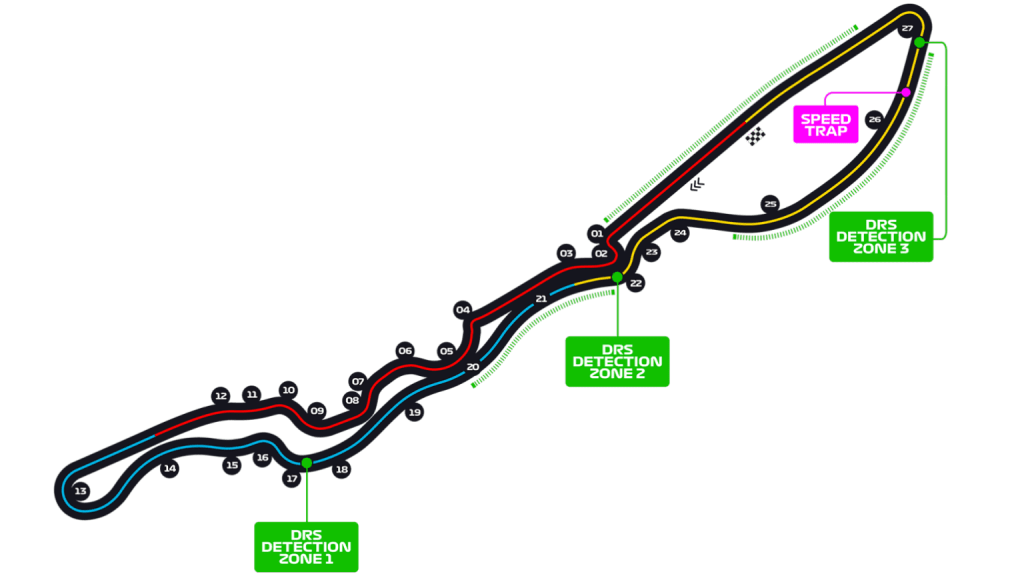
Turns: 27
Top Speed: 330 km/h
Average Speed: 250 km/h
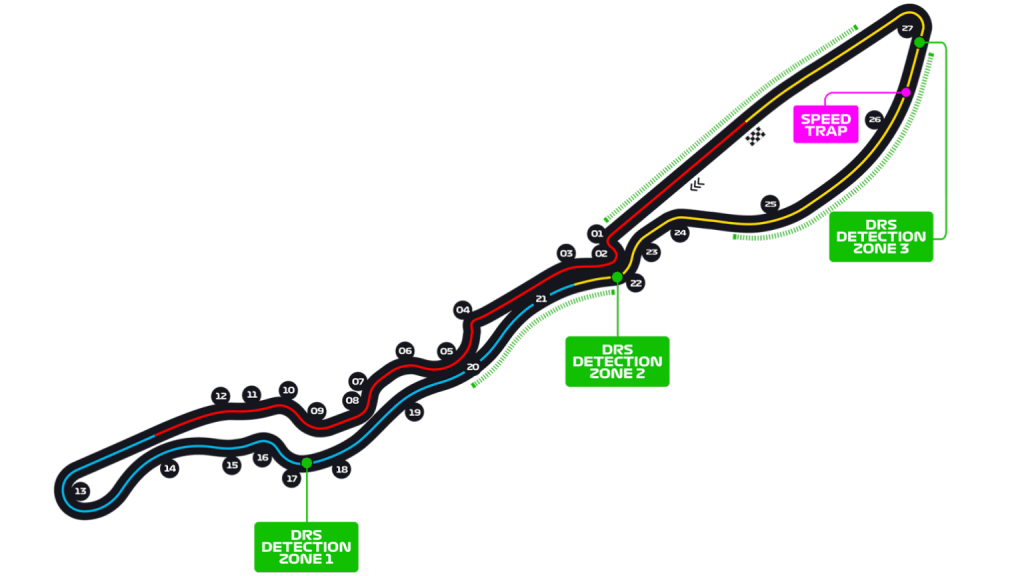
Jeddah Corniche Circuit is the fastest street circuit on the Formula 1 calendar. A 6.174km high-speed waterfront layout with 27 corners, combining sweeping high-speed curves with tight breaking zones. The Red Sea backdrop, floodlights, and coastal winds make it a spectacle, but the combination of high speed and low margin for error tests driver bravery and car stability. The long straights followed by heavy braking zones punish rear tires and place emphasis on low-drag setups and efficient brake cooling.
Overtaking is possible to long straights, but aero balance and tyre degradation control are key. Under night conditions and shifting track temperatures, strategy often revolves around aggressive tyre management, brake wear control, and opportunistic pit stops.

First Grand Prix: 2021
Lap Record: 1:30.734 (2021)
Lap Length: 6.174 km
Race Distance: 50 laps (308.450 km)
DRS Zones: 3
Turns: 27
Top Speed: 330 km/h
Average Speed: 250 km/h
Jeddah Corniche Circuit is the fastest street circuit on the Formula 1 calendar. A 6.174km high-speed waterfront layout with 27 corners, combining sweeping high-speed curves with tight breaking zones. The Red Sea backdrop, floodlights, and coastal winds make it a spectacle, but the combination of high speed and low margin for error tests driver bravery and car stability. The long straights followed by heavy braking zones punish rear tires and place emphasis on low-drag setups and efficient brake cooling.
Overtaking is possible to long straights, but aero balance and tyre degradation control are key. Under night conditions and shifting track temperatures, strategy often revolves around aggressive tyre management, brake wear control, and opportunistic pit stops.

First Grand Prix: 2022
Lap Record: 1:29.708 (2022)
Lap Length: 5.410 km
Race Distance: 57 laps (308.326 km)
DRS Zones: 3
Turns: 19
Top Speed: 320 km/h
Average Speed: 225 km/h
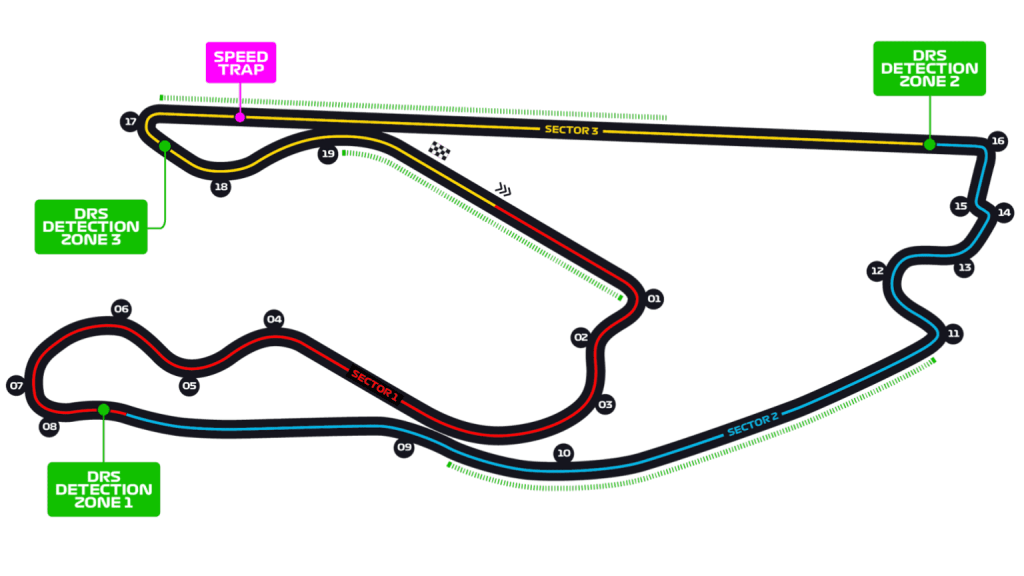
Miami International Autodrome blends long straights with technical low-speed sections built around the Hard Rock Stadium complex. Its layout demands strong braking efficiency, rear-end stability, and enough aerodynamic load to maximize grip through the tight middle sector. The long sweeping blend onto the main straight favors cars with strong mechanical traction and minimal drag.
The track surface can evolve quickly, especially with changing temperatures and Marina-side humidity. Tyre wear becomes a critical factor, and race outcomes often hinge on managing rear degradation over long stints. The varied corner types make setup a compromise between top-speed efficiency and slow corner performance creating a dynamic challenge for teams throughout the weekend.


First Grand Prix: 2022
Lap Record: 1:29.708 (2022)
Lap Length: 5.410 km
Race Distance: 57 laps (308.326 km)
DRS Zones: 3
Turns: 19
Top Speed: 320 km/h
Average Speed: 225 km/h
Miami International Autodrome blends long straights with technical low-speed sections built around the Hard Rock Stadium complex. Its layout demands strong braking efficiency, rear-end stability, and enough aerodynamic load to maximize grip through the tight middle sector. The long sweeping blend onto the main straight favors cars with strong mechanical traction and minimal drag.
The track surface can evolve quickly, especially with changing temperatures and Marina-side humidity. Tyre wear becomes a critical factor, and race outcomes often hinge on managing rear degradation over long stints. The varied corner types make setup a compromise between top-speed efficiency and slow corner performance creating a dynamic challenge for teams throughout the weekend.

First Grand Prix: 1978
Lap Record: 1:13.078 (2019)
Lap Length: 4.361 km
Race Distance: 70 laps (305.270 km)
DRS Zones: 2
Turns: 14
Top Speed: 330 km/h
Average Speed: 220 km/h
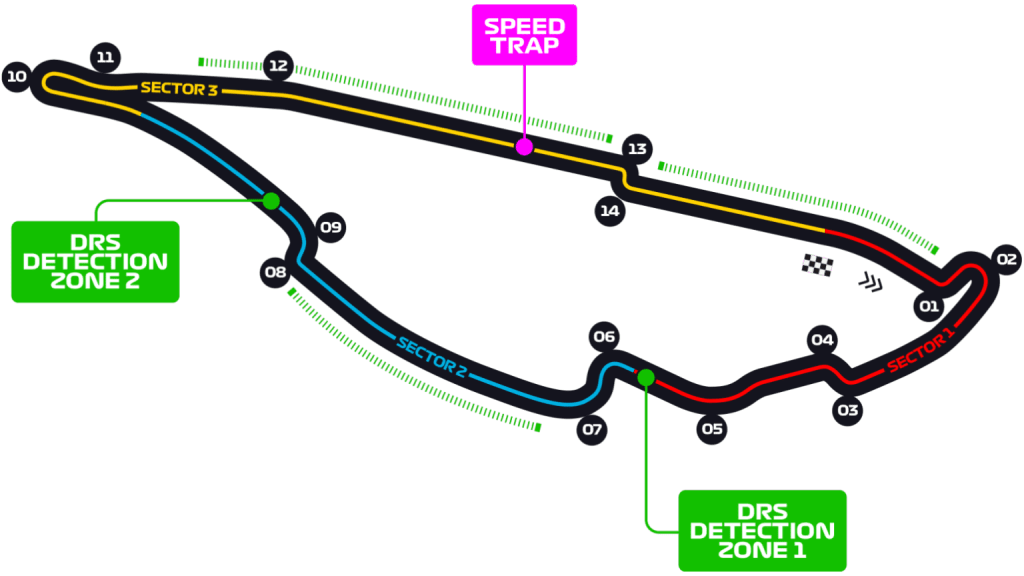
Circuit Gilles Villeneuve is a stop-start, high-commitment circuit defined by hard braking zones, heavy kerb usage, and its iconic “Wall of Champions.” The long straights combined with slow chicanes reward cars with strong traction and stable braking performance. Mechanical grip is crucial, especially through the Turn 6-7 and Turn 13-14 chicanes.
The track’s semi-permanent nature means grip improves rapidly over the weekend, while Montreal’s unpredictable weather often introduces strategic uncertainty. Tyre temperatures can be difficult to maintain, making careful energy management essential during long stints.


First Grand Prix: 1978
Lap Record: 1:13.078 (2019)
Lap Length: 4.361 km
Race Distance: 70 laps (305.270 km)
DRS Zones: 2
Turns: 14
Top Speed: 330 km/h
Average Speed: 220 km/h
Circuit Gilles Villeneuve is a stop-start, high-commitment circuit defined by hard braking zones, heavy kerb usage, and its iconic “Wall of Champions.” The long straights combined with slow chicanes reward cars with strong traction and stable braking performance. Mechanical grip is crucial, especially through the Turn 6-7 and Turn 13-14 chicanes.
The track’s semi-permanent nature means grip improves rapidly over the weekend, while Montreal’s unpredictable weather often introduces strategic uncertainty. Tyre temperatures can be difficult to maintain, making careful energy management essential during long stints.

First Grand Prix: 1950
Lap Record: 1:12.909 (2021)
Lap Length: 3.337 km
Race Distance: 78 laps (260.286 km)
DRS Zones: 1
Turns: 19
Top Speed: 290 km/h
Average Speed: 160 km/h

Monaco remains the calendar’s ultimate precision challenge, a tight twisting, street circuit where margins are microscopic and driver confidence is everything. The lap winds through narrow streets, rapid direction changes, and unforgiving walls, meaning car placement and rhythm dictate performance more than outright speed.
Mechanical grip, traction, and suspension compliance dominate setup priorities. Overtaking is extremely difficult, elevating the importance of qualifying and pit strategy. Drivers must manage tires carefully due to low degradation but high risk of overheating in heavy traffic. Monaco is a mental and technical test where even minor mistakes have major consequences.


First Grand Prix: 1950
Lap Record: 1:12.909 (2021)
Lap Length: 3.337 km
Race Distance: 78 laps (260.286 km)
DRS Zones: 1
Turns: 19
Top Speed: 290 km/h
Average Speed: 160 km/h
Monaco remains the calendar’s ultimate precision challenge, a tight twisting, street circuit where margins are microscopic and driver confidence is everything. The lap winds through narrow streets, rapid direction changes, and unforgiving walls, meaning car placement and rhythm dictate performance more than outright speed.
Mechanical grip, traction, and suspension compliance dominate setup priorities. Overtaking is extremely difficult, elevating the importance of qualifying and pit strategy. Drivers must manage tires carefully due to low degradation but high risk of overheating in heavy traffic. Monaco is a mental and technical test where even minor mistakes have major consequences.

First Grand Prix: 1991
Lap Record: 1:16.330 (2023)
Lap Length: 4.657 km
Race Distance: 66 laps (302.236 km)
DRS Zones: 2
Turns: 14
Top Speed: 320 km/h
Average Speed: 230 km/h

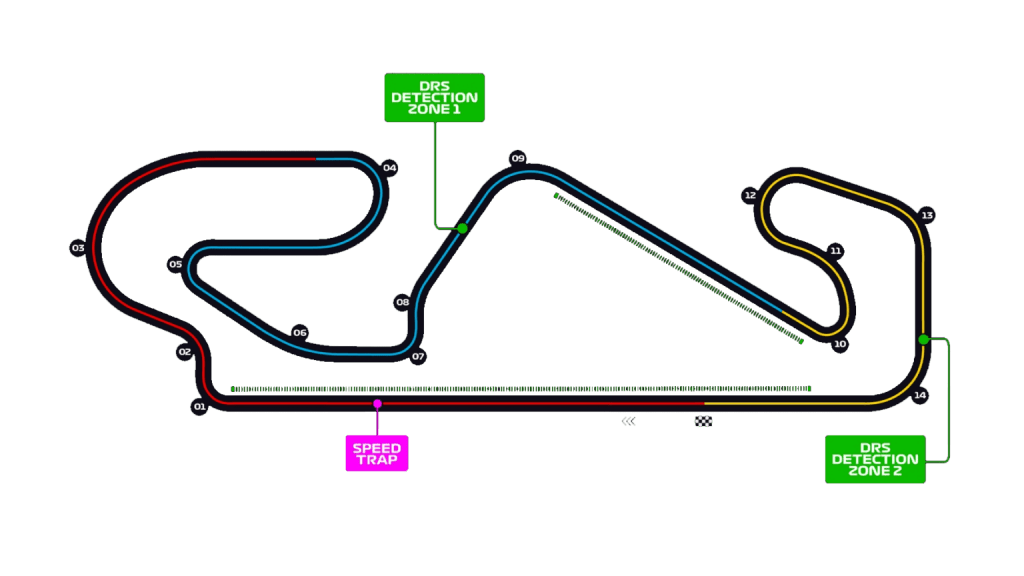
Barcelona is a benchmark circuit for aerodynamic performance, a demanding blend of medium and high-speed corners that exposes weaknesses in any car. Turn 3’s long radius pushes sustained lateral load, while Turns 9 and 12 reward stability and precise throttle control. Mechanical grip remains crucial in the tighter final sector.
Tyre wear, especially on the front-left, often shapes race strategy. Hot temperatures in late May increase thermal degradation, making long stints challenging. Teams frequently use Barcelona to validate aerodynamic packages due to balanced technical profile.

First Grand Prix: 1991
Lap Record: 1:16.330 (2023)
Lap Length: 4.657 km
Race Distance: 66 laps (302.236 km)
DRS Zones: 2
Turns: 14
Top Speed: 330 km/h
Average Speed: 230 km/h
Barcelona is a benchmark circuit for aerodynamic performance, a demanding blend of medium and high-speed corners that exposes weaknesses in any car. Turn 3’s long radius pushes sustained lateral load, while Turns 9 and 12 reward stability and precise throttle control. Mechanical grip remains crucial in the tighter final sector.
Tyre wear, especially on the front-left, often shapes race strategy. Hot temperatures in late May increase thermal degradation, making long stints challenging. Teams frequently use Barcelona to validate aerodynamic packages due to balanced technical profile.

First Grand Prix: 1964
Lap Record: 1:05.619 (2020)
Lap Length: 4.318 km
Race Distance: 71 laps (306.452 km)
DRS Zones: 3
Turns: 10
Top Speed: 330 km/h
Average Speed: 245 km/h
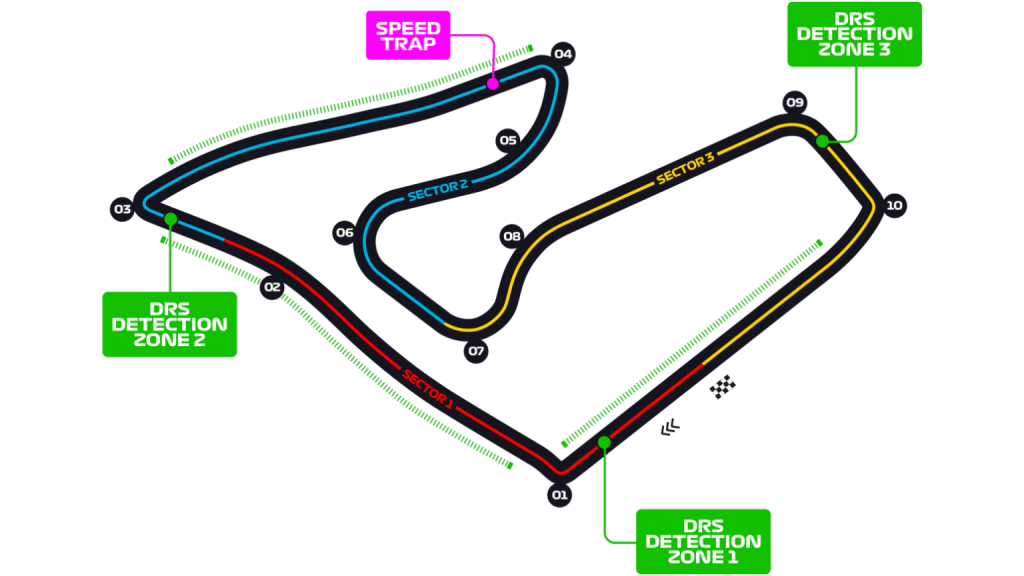
The Red Bull Ring is a short, high-altitude circuit defined by long straights, heavy braking zones, and quick direction changes in the middle sector. The compact layout punishes mistakes, as gaps between cars are naturally small and track limits are easily exceeded through the final corners.
Brake performance and traction are essential, while the elevation adds extra aerodynamic challenge. Reduced air density forces teams to run higher downforce levels to compensate. Tyre wear varies depending on track temperature, but managing the rear tires is typically crucial for race-long consistency.

First Grand Prix: 1964
Lap Record: 1:05.619 (2020)
Lap Length: 4.318 km
Race Distance: 71 laps (306.452 km)
DRS Zones: 3
Turns: 10
Top Speed: 330 km/h
Average Speed: 245 km/h
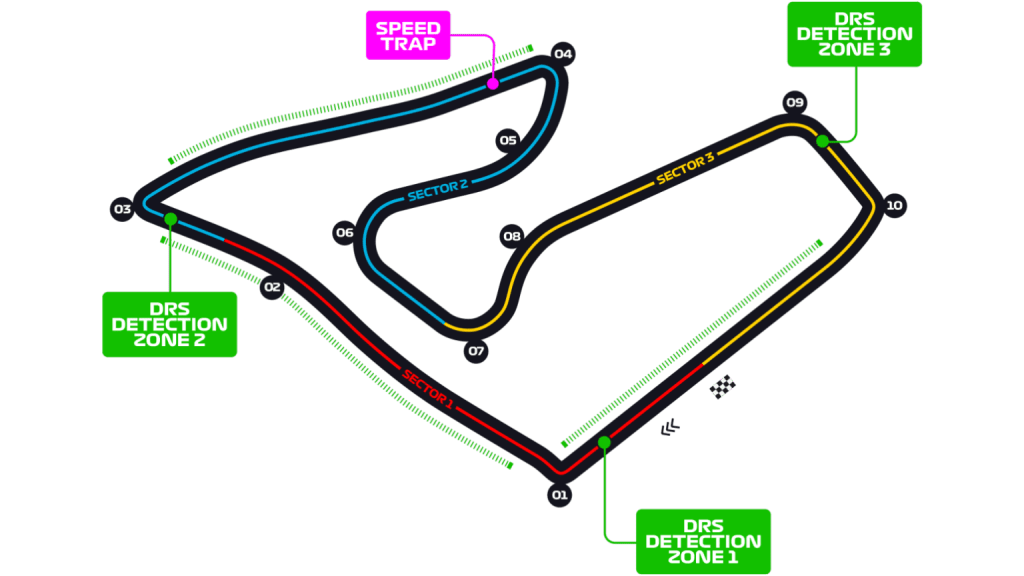
The Red Bull Ring is a short, high-altitude circuit defined by long straights, heavy braking zones, and quick direction changes in the middle sector. The compact layout punishes mistakes, as gaps between cars are naturally small and track limits are easily exceeded through the final corners.
Brake performance and traction are essential, while the elevation adds extra aerodynamic challenge. Reduced air density forces teams to run higher downforce levels to compensate. Tyre wear varies depending on track temperature, but managing the rear tires is typically crucial for race-long consistency.

First Grand Prix: 1950
Lap Record: 1:27.097 (2020)
Lap Length: 5.891 km
Race Distance: 52 laps (306.198 km)
DRS Zones: 2
Turns: 18
Top Speed: 330 km/h
Average Speed: 240 km/h
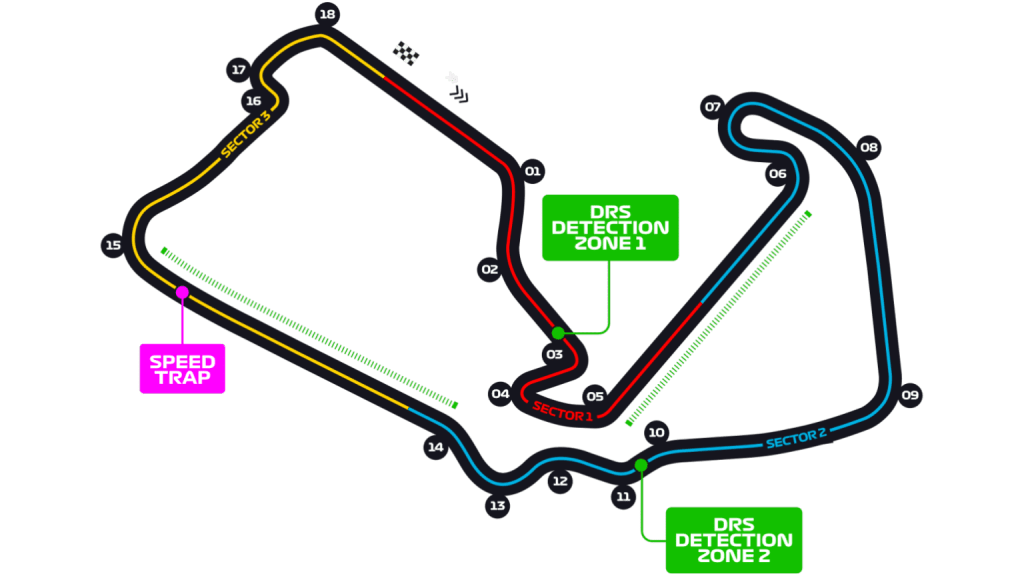
Silverstone is a fast, flowing circuit defined by sweeping high-speed corners that reward aerodynamic efficiency and driver bravery. The famous Maggots-Becketts-Chapel sequence demands precision and confidence, while rapid direction changes expose any instability in the car’s balance. Wind sensitivity is often a major factor across the open airfield layout.
Mechanical grip becomes more important through the tighter final sector, where maintaining rhythm and managing rear tyre slip is essential. The track’s combination of long, loaded corners and abrasive surface usually leads to significant tyre wear, making strategy and stint management decisive.


First Grand Prix: 1950
Lap Record: 1:27.097 (2020)
Lap Length: 5.891 km
Race Distance: 52 laps (306.198 km)
DRS Zones: 3
Turns: 18
Top Speed: 330 km/h
Average Speed: 240 km/h
Silverstone is a fast, flowing circuit defined by sweeping high-speed corners that reward aerodynamic efficiency and driver bravery. The famous Maggots-Becketts-Chapel sequence demands precision and confidence, while rapid direction changes expose any instability in the car’s balance. Wind sensitivity is often a major factor across the open airfield layout.
Mechanical grip becomes more important through the tighter final sector, where maintaining rhythm and managing rear tyre slip is essential. The track’s combination of long, loaded corners and abrasive surface usually leads to significant tyre wear, making strategy and stint management decisive.

First Grand Prix: 1950
Lap Record: 1:46.286 (2021)
Lap Length: 7.004 km
Race Distance: 44 laps (308.052 km)
DRS Zones: 2
Turns: 19
Top Speed: 340 km/h
Average Speed: 210 km/h

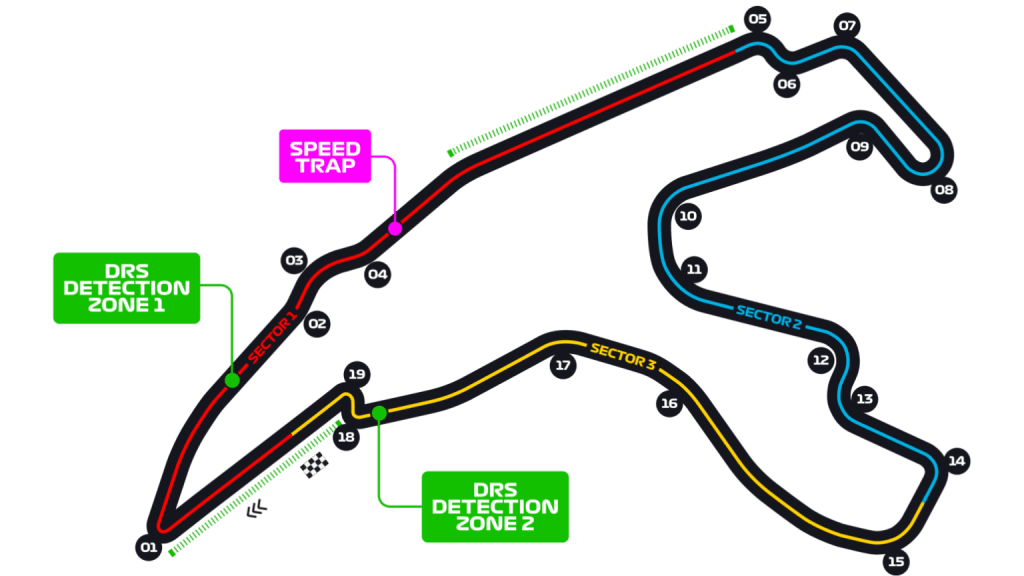
Spa-Francorchamps is one of the fastest, longest, and most demanding circuits on the calendar, defined by dramatic elevation changes, high-speed corners, and a flowing layout that rewards driver commitment and aerodynamic efficiency. Iconic sections such as Eau Rouge-Raidillon place extreme demands on car stability and driver confidence, while the long straights punish any deficit in power or overall efficiency.
The circuit blends extended high-speed sequences with technical sections where rhythm and precision are critical. Tyre behavior can vary significantly due to the length of the lap and Spa’s famously unpredictable weather, which often creates mixed conditions across different sectors. Maintaining consistency over long stints and adapting strategy to a constantly evolving track surface is frequently decisive in determining the final outcome.

First Grand Prix: 1950
Lap Record: 1:46.286 (2021)
Lap Length: 7.004 km
Race Distance: 44 laps (308.052 km)
DRS Zones: 2
Turns: 19
Top Speed: 340 km/h
Average Speed: 210 km/h
Spa-Francorchamps is one of the fastest, longest, and most demanding circuits on the calendar, defined by dramatic elevation changes, high-speed corners, and a flowing layout that rewards driver commitment and aerodynamic efficiency. Iconic sections such as Eau Rouge-Raidillon place extreme demands on car stability and driver confidence, while the long straights punish any deficit in power or overall efficiency.
The circuit blends extended high-speed sequences with technical sections where rhythm and precision are critical. Tyre behavior can vary significantly due to the length of the lap and Spa’s famously unpredictable weather, which often creates mixed conditions across different sectors. Maintaining consistency over long stints and adapting strategy to a constantly evolving track surface is frequently decisive in determining the final outcome.

First Grand Prix: 1986
Lap Record: 1:16.627 (2020)
Lap Length: 4.381 km
Race Distance: 70 laps (306.670 km)
DRS Zones: 1
Turns: 14
Top Speed: 310 km/h
Average Speed: 185 km/h
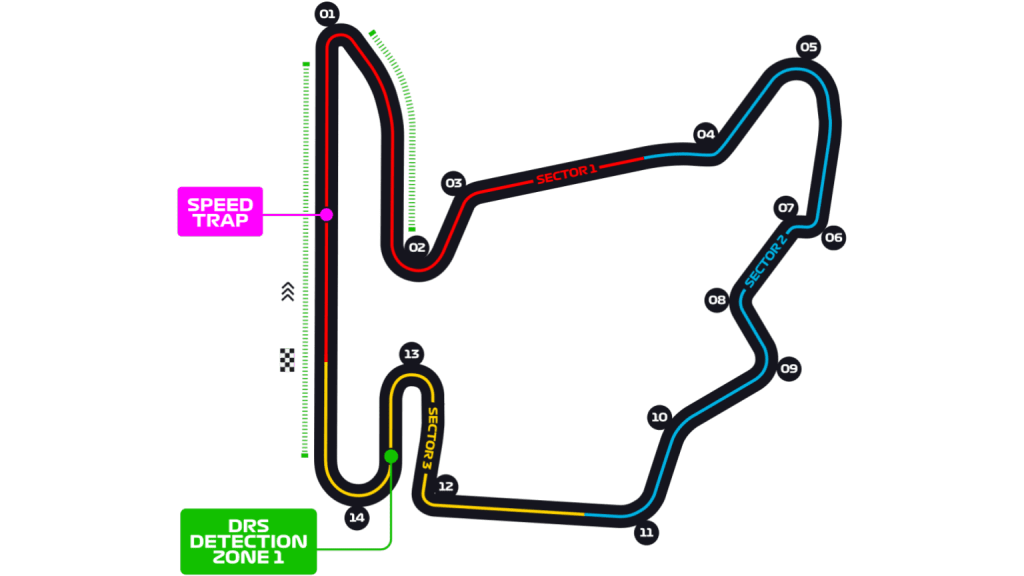
The Hungaroring is a tight, technical circuit where precision and rhythm matter more than outright speed. Its narrow layout and continuous sequences of medium-speed corners make overtaking difficult, placing huge emphasis on qualifying and race strategy.
High ambient temperatures and relentless cornering load often lead to significant tyre degradation. Managing rear-tyre heat is crucial for maintaining pace over long stints, while mechanical grip and downforce dominate setup choices.


First Grand Prix: 1986
Lap Record: 1:16.627 (2020)
Lap Length: 4.381 km
Race Distance: 70 laps (306.670 km)
DRS Zones: 1
Turns: 14
Top Speed: 310 km/h
Average Speed: 185 km/h
The Hungaroring is a tight, technical circuit where precision and rhythm matter more than outright speed. Its narrow layout and continuous sequences of medium-speed corners make overtaking difficult, placing huge emphasis on qualifying and race strategy.
High ambient temperatures and relentless cornering load often lead to significant tyre degradation. Managing rear-tyre heat is crucial for maintaining pace over long stints, while mechanical grip and downforce dominate setup choices.

First Grand Prix: 1950
Lap Record: 1:11.097 (2021)
Lap Length: 4.259 km
Race Distance: 72 laps (306.648 km)
DRS Zones: 2
Turns: 14
Top Speed: 320 km/h
Average Speed: 205 km/h
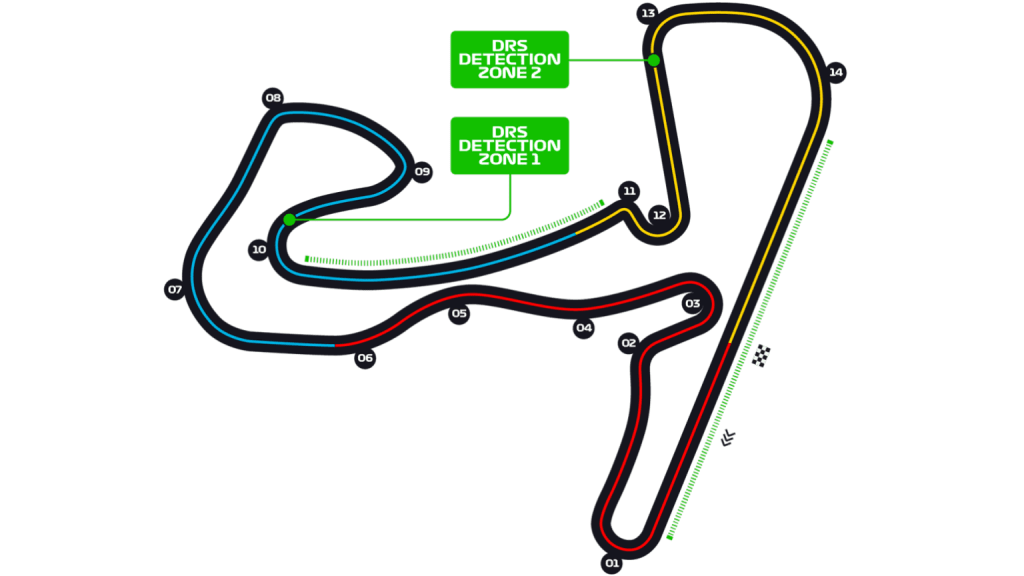
Zandvoort is a compact, high-commitment circuit defined by steep banking, blind corner entries, and rapid elevation changes. The layout demands absolute precision, especially through the banked Hugenholtz and Arie Luyendyk corners, where sustained lateral load tests chassis stability.
The narrow track makes overtaking difficult, so maintaining tyre life across long, loaded corners becomes essential. Wind gusts from the nearby dunes can affect car balance, and teams typically prioritize downforce and mechanical grip over straight-line speed.


First Grand Prix: 1950
Lap Record: 1:11.097 (2021)
Lap Length: 4.259 km
Race Distance: 72 laps (306.648 km)
DRS Zones: 2
Turns: 14
Top Speed: 320 km/h
Average Speed: 205 km/h
Zandvoort is a compact, high-commitment circuit defined by steep banking, blind corner entries, and rapid elevation changes. The layout demands absolute precision, especially through the banked Hugenholtz and Arie Luyendyk corners, where sustained lateral load tests chassis stability.
The narrow track makes overtaking difficult, so maintaining tyre life across long, loaded corners becomes essential. Wind gusts from the nearby dunes can affect car balance, and teams typically prioritize downforce and mechanical grip over straight-line speed.

First Grand Prix: 1950
Lap Record: 1:21.046 (2018)
Lap Length: 5.793 km
Race Distance: 53 laps (306.720 km)
DRS Zones: 2
Turns: 11
Top Speed: 360 km/h
Average Speed: 259 km/h
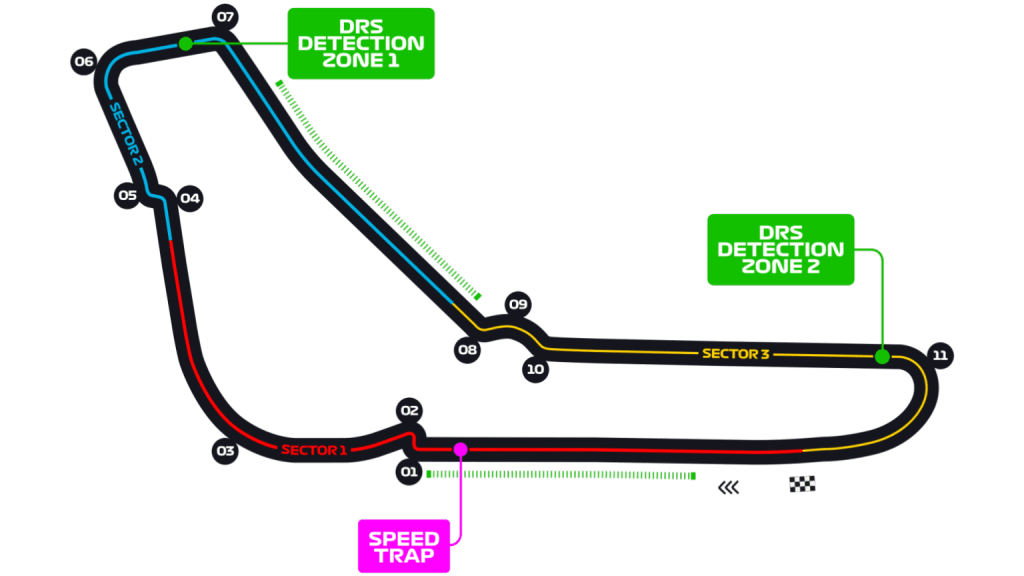
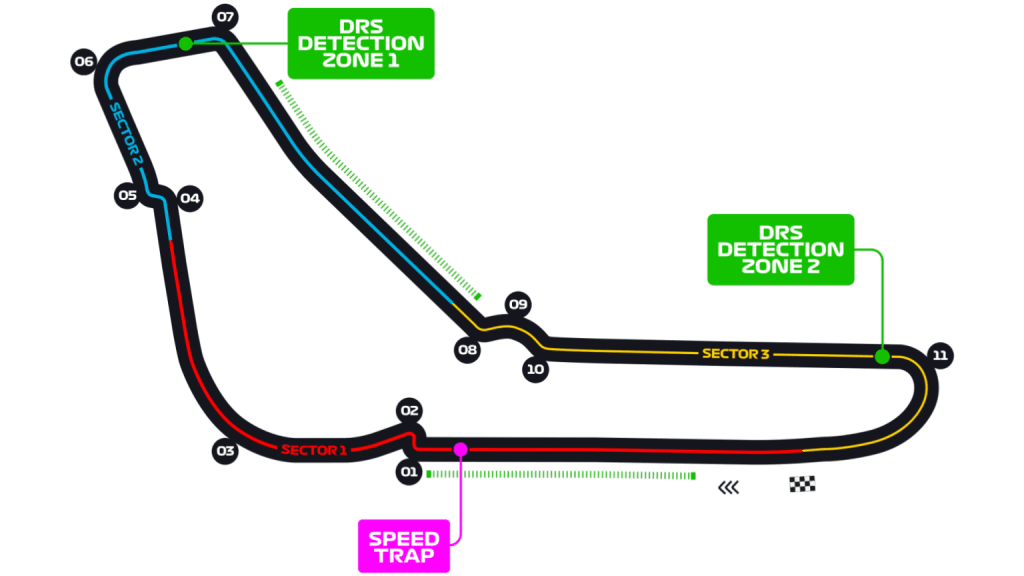
Monza is the ultimate low-downforce challenge, built around long straights, heavy braking zones, and rapid acceleration. The layout stresses power-unit performance and braking stability, with chicanes that punish even small mistakes.
Tyre temperatures can be difficult to control due to limited cornering load, while aggressive kerb usage demands a compliant suspension setup. Slipstreaming has a major influence on qualifying and race positioning, making track placement and timing critically important.

First Grand Prix: 1950
Lap Record: 1:21.046 (2018)
Lap Length: 5.793 km
Race Distance: 53 laps (306.720 km)
DRS Zones: 2
Turns: 11
Top Speed: 360 km/h
Average Speed: 259 km/h
Monza is the ultimate low-downforce challenge, built around long straights, heavy braking zones, and rapid acceleration. The layout stresses power-unit performance and braking stability, with chicanes that punish even small mistakes.
Tyre temperatures can be difficult to control due to limited cornering load, while aggressive kerb usage demands a compliant suspension setup. Slipstreaming has a major influence on qualifying and race positioning, making track placement and timing critically important.

First Grand Prix: 2026
Lap Record: TBD
Lap Length: 5.474 km
Race Distance: 57 laps (312.018 km)
DRS Zones: NA
Turns: 22
Top Speed: 330 km/h (Est.)
Average Speed: 215 km/h (Est.)
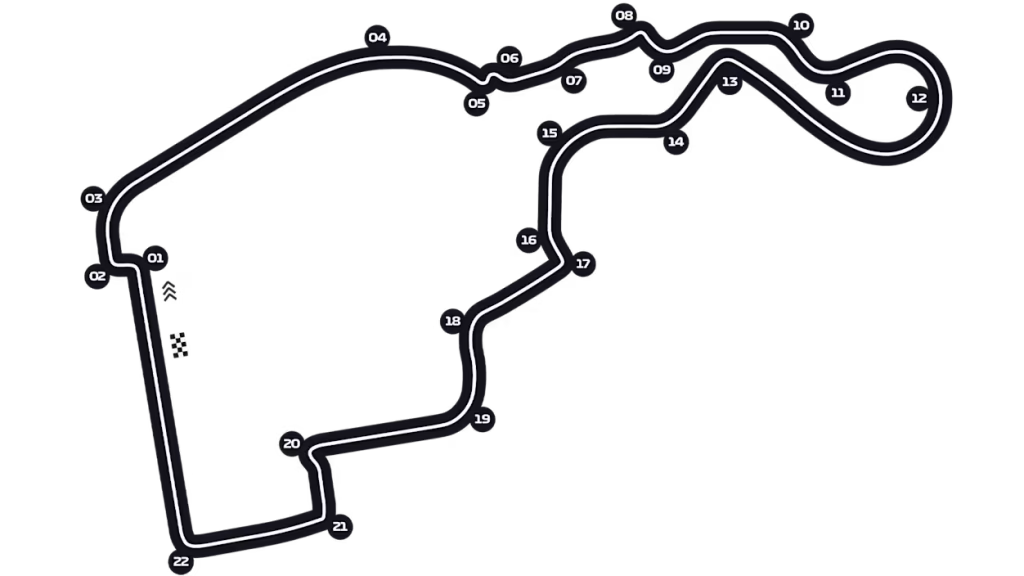
Madring is a fast flowing semi-street circuit that blends city street with purpose built sections creating a layout that rewards rhythm and confident corner sequencing. The track features long sweeping corners and multiple direction changes that push aerodynamic platform to its limit. Drivers must commit fully through the high speed sections where maintaining minimum speed is crucial.
Mechanical grip and tyre control become important in the slower corners especially in the opening and closing sectors. Temperatures in Madrid can rise significantly which increases performance during long stints. The mix of surface types can introduce setup compromises making the circuit an interesting test of overall car balance.


First Grand Prix: 2026
Lap Record: TBD
Lap Length: 5.474 km
Race Distance: 57 laps (312.018 km)
DRS Zones: NA
Turns: 22
Top Speed: 330 km/h (Est.)
Average Speed: 215 km/h (Est.)
Madring is a fast flowing semi-street circuit that blends city street with purpose built sections creating a layout that rewards rhythm and confident corner sequencing. The track features long sweeping corners and multiple direction changes that push aerodynamic platform to its limit. Drivers must commit fully through the high speed sections where maintaining minimum speed is crucial.
Mechanical grip and tyre control become important in the slower corners especially in the opening and closing sectors. Temperatures in Madrid can rise significantly which increases performance during long stints. The mix of surface types can introduce setup compromises making the circuit an interesting test of overall car balance.

First Grand Prix: 2016
Lap Record: 1:43.009 (2019)
Lap Length: 6.003 km
Race Distance: 51 laps (306.049 km)
DRS Zones: 2
Turns: 20
Top Speed: 360 km/h
Average Speed: 215 km/h

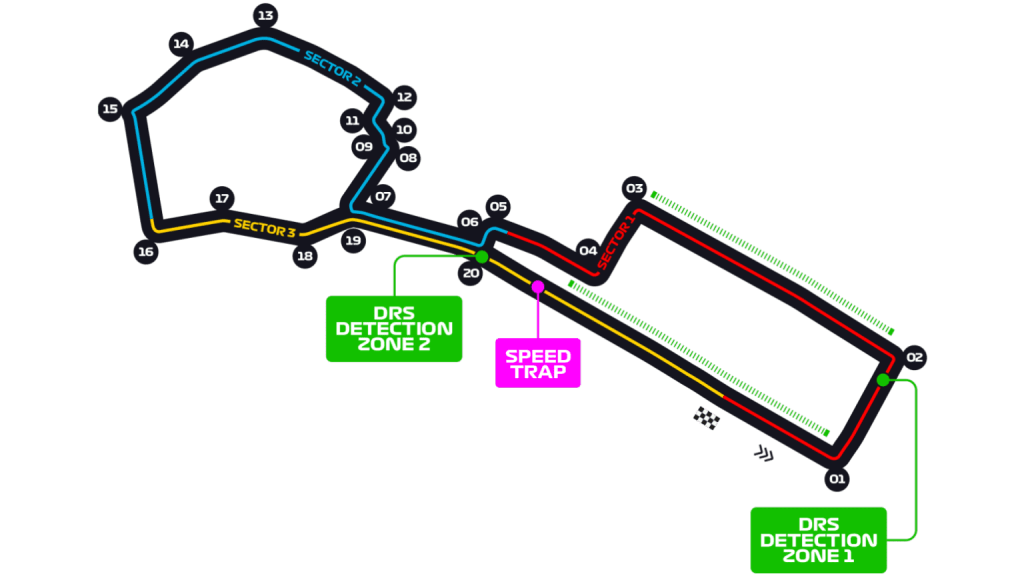
Baku is a unique street circuit defined by extremely long straights, tight castle-section braking zones, and rapid contrasts between high-speed and slow speed performance. The layout places huge emphasis on aerodynamic efficiency since cars must generate strong top speed without destabilizing the platform through the technical middle sector.
The narrow medieval section rewards precision and throttle discipline while the final flat-out run to the line exposes any drag inefficiency. Tyre temperatures can fluctuate because the long straights cool the rubber before heavy braking zones. Drivers must balance aggression with patience since the walls sit close and small mistakes can change the entire race.

First Grand Prix: 2016
Lap Record: 1:43.009 (2019)
Lap Length: 6.003 km
Race Distance: 51 laps (306.049 km)
DRS Zones: 2
Turns: 20
Top Speed: 360 km/h
Average Speed: 215 km/h
Baku is a unique street circuit defined by extremely long straights, tight castle-section braking zones, and rapid contrasts between high-speed and slow speed performance. The layout places huge emphasis on aerodynamic efficiency since cars must generate strong top speed without destabilizing the platform through the technical middle sector.
The narrow medieval section rewards precision and throttle discipline while the final flat-out run to the line exposes any drag inefficiency. Tyre temperatures can fluctuate because the long straights cool the rubber before heavy braking zones. Drivers must balance aggression with patience since the walls sit close and small mistakes can change the entire race.

First Grand Prix: 2008
Lap Record: 1:35.867 (2023)
Lap Length: 4.940 km
Race Distance: 63 laps (311.220 km)
DRS Zones: 3
Turns: 19
Top Speed: 330 km/h
Average Speed: 215 km/h
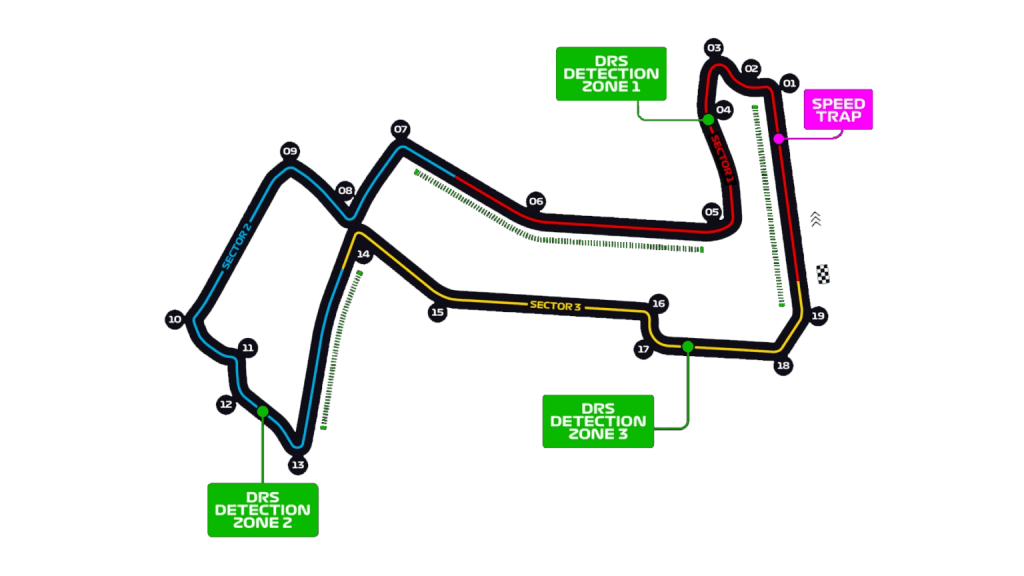
Singapore is one of the longest and most demanding street circuits on the calendar featuring relentless corner sequences and intense physical strain on the drivers. The layout requires maximum precision because the walls sit close and the rhythm changes frequently through slow ninety degree corners and medium speed direction shifts.
Heat and humidity amplify tyre and brake degradation forcing teams to manage energy deployment and cooling carefully. Strategy often hinges on maintaining tyre life through long stints and avoiding track position losses because overtaking is difficult. Singapore rewards cars with strong mechanical grip and stable low speed traction.

First Grand Prix: 2008
Lap Record: 1:35.867 (2023)
Lap Length: 4.940 km
Race Distance: 63 laps (311.220 km)
DRS Zones: 3
Turns: 19
Top Speed: 330 km/h
Average Speed: 215 km/h
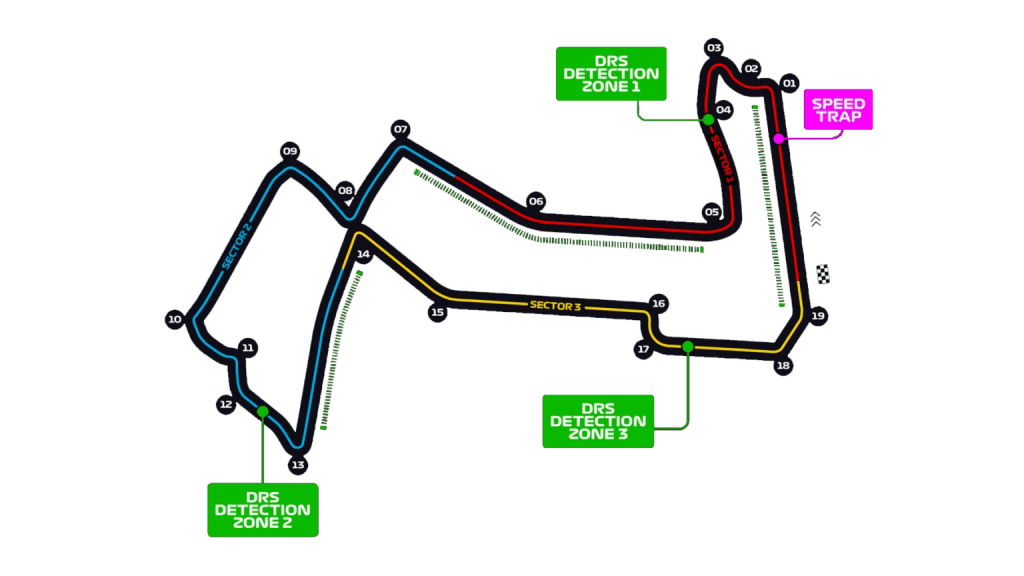
Singapore is one of the longest and most demanding street circuits on the calendar featuring relentless corner sequences and intense physical strain on the drivers. The layout requires maximum precision because the walls sit close and the rhythm changes frequently through slow ninety degree corners and medium speed direction shifts.
Heat and humidity amplify tyre and brake degradation forcing teams to manage energy deployment and cooling carefully. Strategy often hinges on maintaining tyre life through long stints and avoiding track position losses because overtaking is difficult. Singapore rewards cars with strong mechanical grip and stable low speed traction.

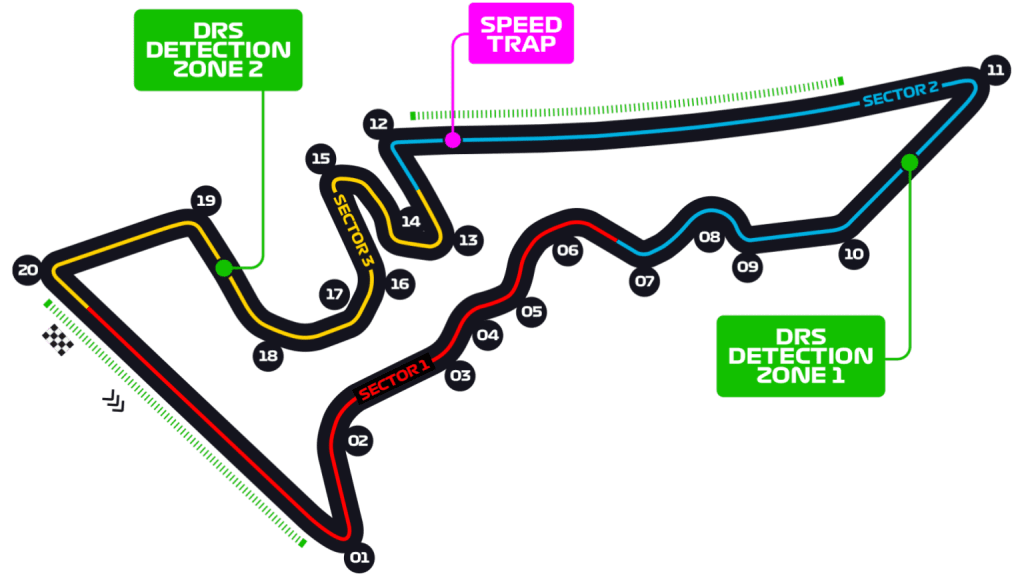
First Grand Prix: 2012
Lap Record: 1:36.169 (2019)
Lap Length: 5.513 km
Race Distance: 56 laps (308.728 km)
DRS Zones: 2
Turns: 20
Top Speed: 325 km/h
Average Speed: 210 km/h
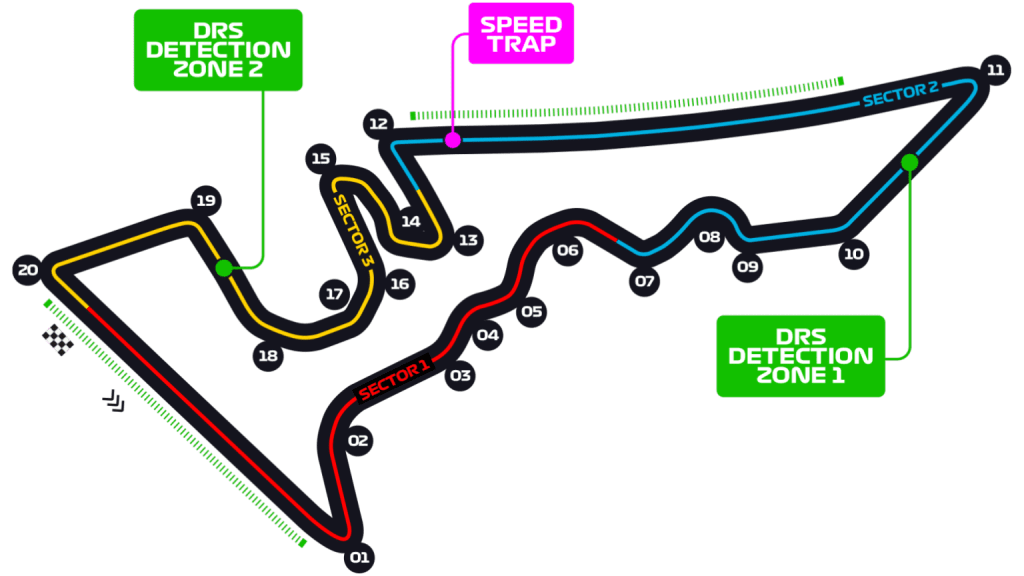
COTA is a hybrid circuit combining high speed sweeps, sharp braking zones, and flowing rhythm changes that reward cars with strong aerodynamic stability. The opening sector features fast S-curves where maintaining balance during rapid direction changes is crucial especially through the long left hander at Turn 10.
The heavy braking zones at Turn 11 and Turn 12 create key overtaking opportunities while the final sector demands traction and precise throttle control. Tyre wear can be high depending on track temperature, and bumps on the surface often influence mechanical setup. Teams must find a compromise between straight line efficiency and grip through the fast corners.

First Grand Prix: 2012
Lap Record: 1:36.169 (2019)
Lap Length: 5.513 km
Race Distance: 56 laps (308.728 km)
DRS Zones: 2
Turns: 20
Top Speed: 325 km/h
Average Speed: 210 km/h
COTA is a hybrid circuit combining high speed sweeps, sharp braking zones, and flowing rhythm changes that reward cars with strong aerodynamic stability. The opening sector features fast S-curves where maintaining balance during rapid direction changes is crucial especially through the long left hander at Turn 10.
The heavy braking zones at Turn 11 and Turn 12 create key overtaking opportunities while the final sector demands traction and precise throttle control. Tyre wear can be high depending on track temperature, and bumps on the surface often influence mechanical setup. Teams must find a compromise between straight line efficiency and grip through the fast corners.

First Grand Prix: 1963
Lap Record: 1:17.774 (2021)
Lap Length: 4.304 km
Race Distance: 71 laps (305.609 km)
DRS Zones: 2
Turns: 17
Top Speed: 360 km/h
Average Speed: 210 km/h

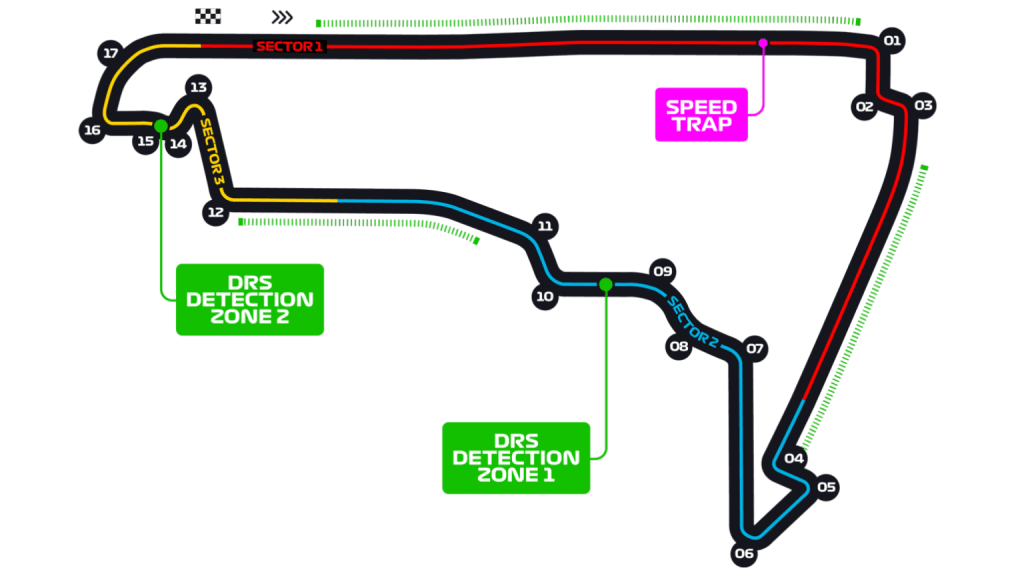
The Autodromo Hermanos Rodriguez is defined by extreme altitude which reduces air density and makes aerodynamic efficiency the central challenge of the weekend. Cars run maximum downforce yet still feel light and unstable especially through the fast S-curves because the thin air reduces drag and downforce simultaneously.
Braking performance becomes harder to control and cooling systems work less effectively which increases thermal stress on engines and brakes. Traction is vital through the slow stadium section where precision and tyre management shape race consistency. Overtaking opportunities mainly occur on the enormous main straight thanks to the low drag environment.

First Grand Prix: 1963
Lap Record: 1:17.774 (2021)
Lap Length: 4.304 km
Race Distance: 71 laps (305.609 km)
DRS Zones: 2
Turns: 17
Top Speed: 360 km/h
Average Speed: 210 km/h
The Autodromo Hermanos Rodriguez is defined by extreme altitude which reduces air density and makes aerodynamic efficiency the central challenge of the weekend. Cars run maximum downforce yet still feel light and unstable especially through the fast S-curves because the thin air reduces drag and downforce simultaneously.
Braking performance becomes harder to control and cooling systems work less effectively which increases thermal stress on engines and brakes. Traction is vital through the slow stadium section where precision and tyre management shape race consistency. Overtaking opportunities mainly occur on the enormous main straight thanks to the low drag environment.

First Grand Prix: 1973
Lap Record: 1:10.540 (2018)
Lap Length: 4.309 km
Race Distance: 71 laps (305.939 km)
DRS Zones: 2
Turns: 15
Top Speed: 330 km/h
Average Speed: 215 km/h
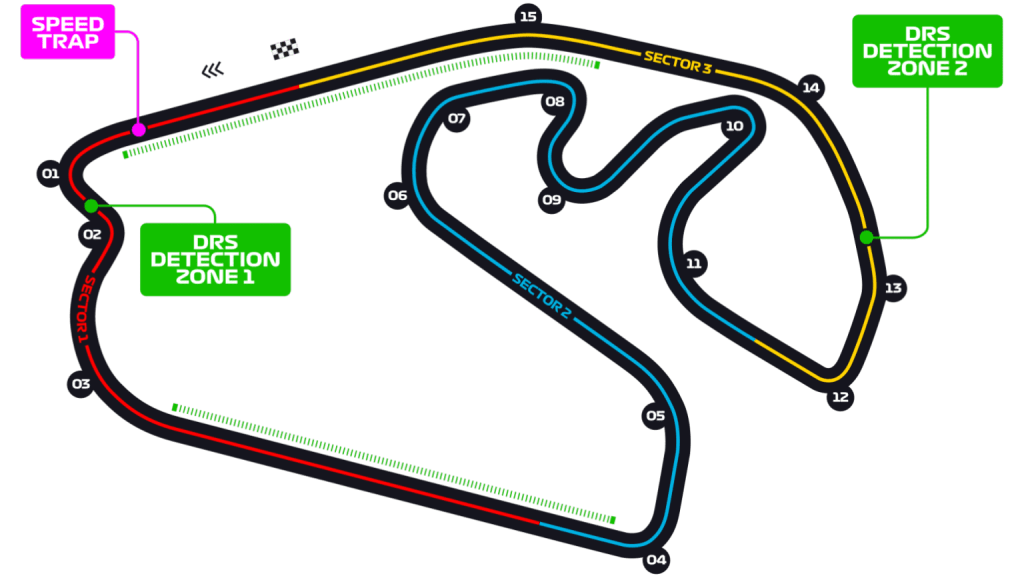
Interlagos is a compact and fowing circuit famous for its elevation changes, fast sweepers, and unpredictable weather that can transform the race at any moment. The anti-clockwise layout is physically demanding, and the long, uphill run through the final corners places a premium on engine performance and traction.
The middle sector is tight and technical requiring a stable rear end and confident direction changes. Tyre wear can escalate quickly on the abrasive surface especially when temperatures rise. Overtaking is frequent due to the dynamic first sector and long pit straight but maintaining tyre consistency across stints often determines who stays competitive late in the race.


First Grand Prix: 1973
Lap Record: 1:10.540 (2018)
Lap Length: 4.309 km
Race Distance: 71 laps (305.939 km)
DRS Zones: 2
Turns: 15
Top Speed: 330 km/h
Average Speed: 215 km/h
Interlagos is a compact and fowing circuit famous for its elevation changes, fast sweepers, and unpredictable weather that can transform the race at any moment. The anti-clockwise layout is physically demanding, and the long, uphill run through the final corners places a premium on engine performance and traction.
The middle sector is tight and technical requiring a stable rear end and confident direction changes. Tyre wear can escalate quickly on the abrasive surface especially when temperatures rise. Overtaking is frequent due to the dynamic first sector and long pit straight but maintaining tyre consistency across stints often determines who stays competitive late in the race.

First Grand Prix: 2023
Lap Record: 1:35.490 (2023)
Lap Length: 6.201 km
Race Distance: 50 laps (310.926 km)
DRS Zones: 2
Turns: 17
Top Speed: 350 km/h
Average Speed: 235 km/h

Las Vegas is a high-speed street circuit defined by long flat-out sections, heavy braking zones, and low-grip conditions that evolve dramatically across the weekend. The layout rewards cars with strong straight-line efficiency while traction out of slow corners is critical for overtaking and defending on the long Strip.
Temperatures swings after sunset influence tyre behavior and brake performance requiring teams to adjust cooling and setup through the weekend. The smooth surface reduces tyre wear but also makes warm-up extremely challenging especially during qualifying. Race strategy often hinges on maintaining confidence under braking and maximizing exit speed onto the long straights.


First Grand Prix: 2023
Lap Record: 1:35.490 (2023)
Lap Length: 6.201 km
Race Distance: 50 laps (310.926 km)
DRS Zones: 2
Turns: 17
Top Speed: 350 km/h
Average Speed: 235 km/h
Las Vegas is a high-speed street circuit defined by long flat-out sections, heavy braking zones, and low-grip conditions that evolve dramatically across the weekend. The layout rewards cars with strong straight-line efficiency while traction out of slow corners is critical for overtaking and defending on the long Strip.
Temperatures swings after sunset influence tyre behavior and brake performance requiring teams to adjust cooling and setup through the weekend. The smooth surface reduces tyre wear but also makes warm-up extremely challenging especially during qualifying. Race strategy often hinges on maintaining confidence under braking and maximizing exit speed onto the long straights.

First Grand Prix: 2021
Lap Record: 1:23.196 (2021)
Lap Length: 5.380 km
Race Distance: 57 laps (306.660 km)
DRS Zones: 2
Turns: 16
Top Speed: 330 km/h
Average Speed: 220 km/h
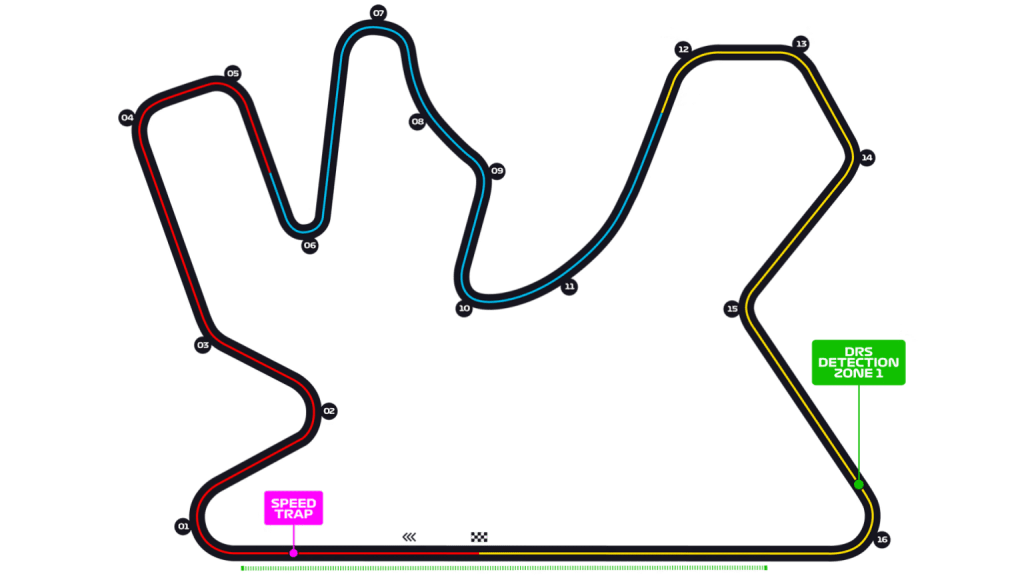
Lusail is a fast and sweeping circuit dominated by long-radius corners that expose aerodynamic balance and mid-speed stability. Drivers rely on strong front-end grip to carry speed through the flowing first sector while maintaining tyre life through the prolonged lateral loads.
Track abrasion can be harsh especially on the front tires, and evening temperatures only partially reduce stress on the compounds. Consistency across the long stints is essential because the layout encourages smooth driving rather than aggressive inputs. Overtaking typically requires a strong exit onto the main straight or a strategic pace advantage.

First Grand Prix: 2021
Lap Record: 1:23.196 (2021)
Lap Length: 5.380 km
Race Distance: 57 laps (306.660 km)
DRS Zones: 2
Turns: 16
Top Speed: 330 km/h
Average Speed: 220 km/h
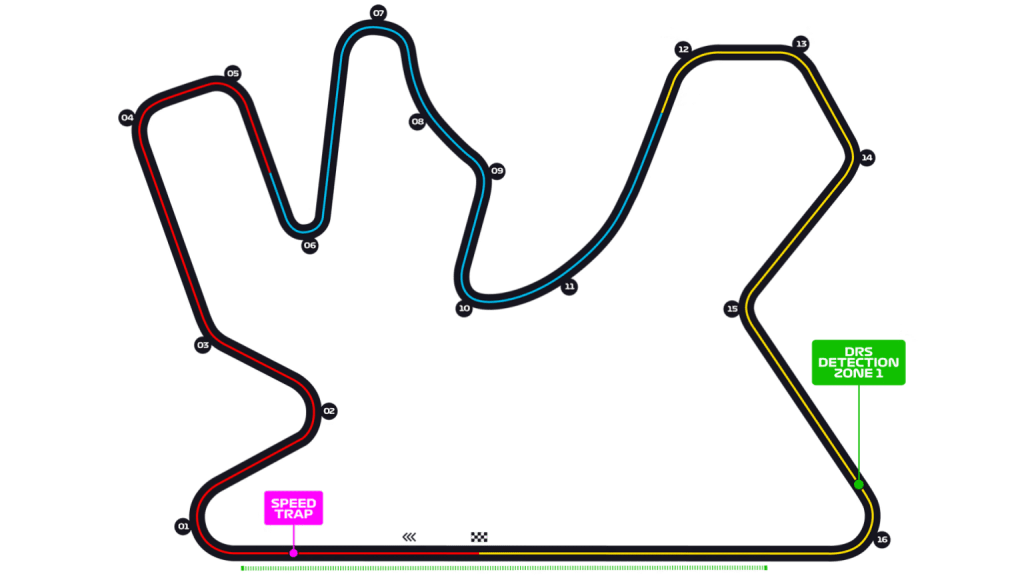
Lusail is a fast and sweeping circuit dominated by long-radius corners that expose aerodynamic balance and mid-speed stability. Drivers rely on strong front-end grip to carry speed through the flowing first sector while maintaining tyre life through the prolonged lateral loads.
Track abrasion can be harsh especially on the front tires, and evening temperatures only partially reduce stress on the compounds. Consistency across the long stints is essential because the layout encourages smooth driving rather than aggressive inputs. Overtaking typically requires a strong exit onto the main straight or a strategic pace advantage.

First Grand Prix: 2009
Lap Record: 1:26.103 (2021)
Lap Length: 5.281 km
Race Distance: 58 laps (306.124 km)
DRS Zones: 2
Turns: 16
Top Speed: 330 km/h
Average Speed: 210 km/h
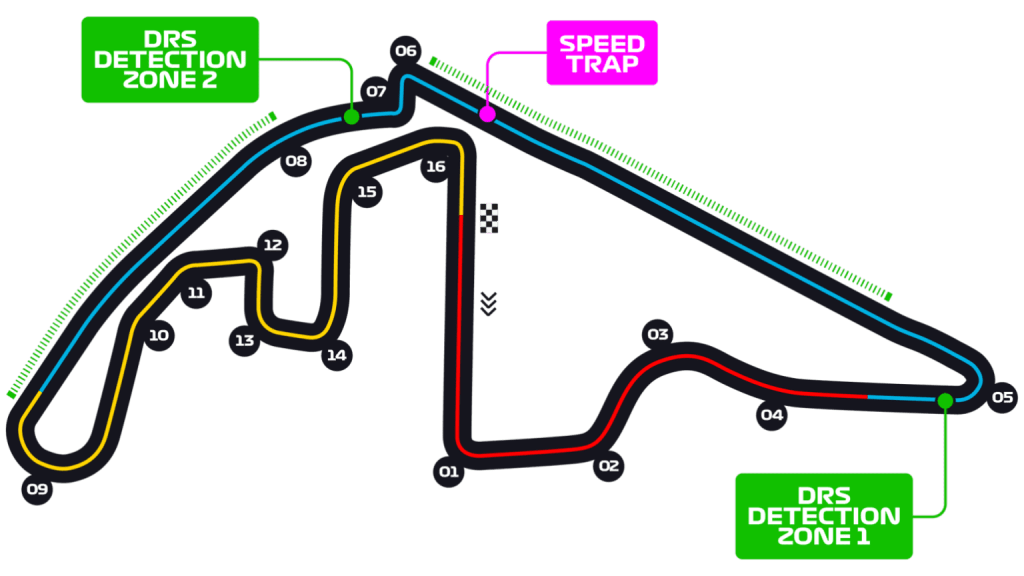
Yas Marina blends sweeping high-speed corners with technical low-speed sections producing a setup compromise that challenges both downforce and traction. The new layout encourages higher cornering speeds in the first sector while the long straights demand efficient aero performance.
Tyre management becomes increasingly important as the track evolves from daylight to night under the floodlights. Braking stability and rear traction are crucial in the slower final corners while the smooth surface keeps degradation low but makes temperature control key. Race outcomes often hinge on timing pit stops around safety-car windows and maintaining rhythm through the varied sectors.

First Grand Prix: 2009
Lap Record: 1:26.103 (2021)
Lap Length: 5.281 km
Race Distance: 58 laps (306.124 km)
DRS Zones: 2
Turns: 16
Top Speed: 330 km/h
Average Speed: 210 km/h
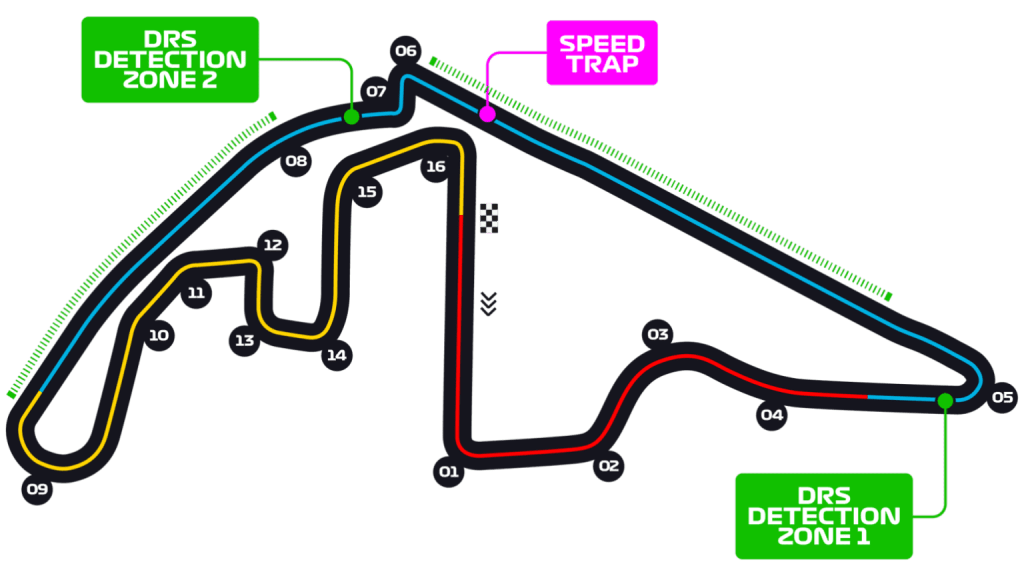
Yas Marina blends sweeping high-speed corners with technical low-speed sections producing a setup compromise that challenges both downforce and traction. The new layout encourages higher cornering speeds in the first sector while the long straights demand efficient aero performance.
Tyre management becomes increasingly important as the track evolves from daylight to night under the floodlights. Braking stability and rear traction are crucial in the slower final corners while the smooth surface keeps degradation low but makes temperature control key. Race outcomes often hinge on timing pit stops around safety-car windows and maintaining rhythm through the varied sectors.
