Newsletter Subscribe
Enter your email address below and subscribe to our newsletter
Mexico City has launched a $12 million renovation of the Autódromo Hermanos Rodríguez to retain FIA Grade 1 homologation ahead of the 2026 Mexican Grand Prix on October 30 to November 1.
One of Formula 1’s most beloved venues has begun a renovation designed to guarantee its place on the calendar. The question is not whether it will be ready. It is whether a race this beloved still needs to make the case for itself.
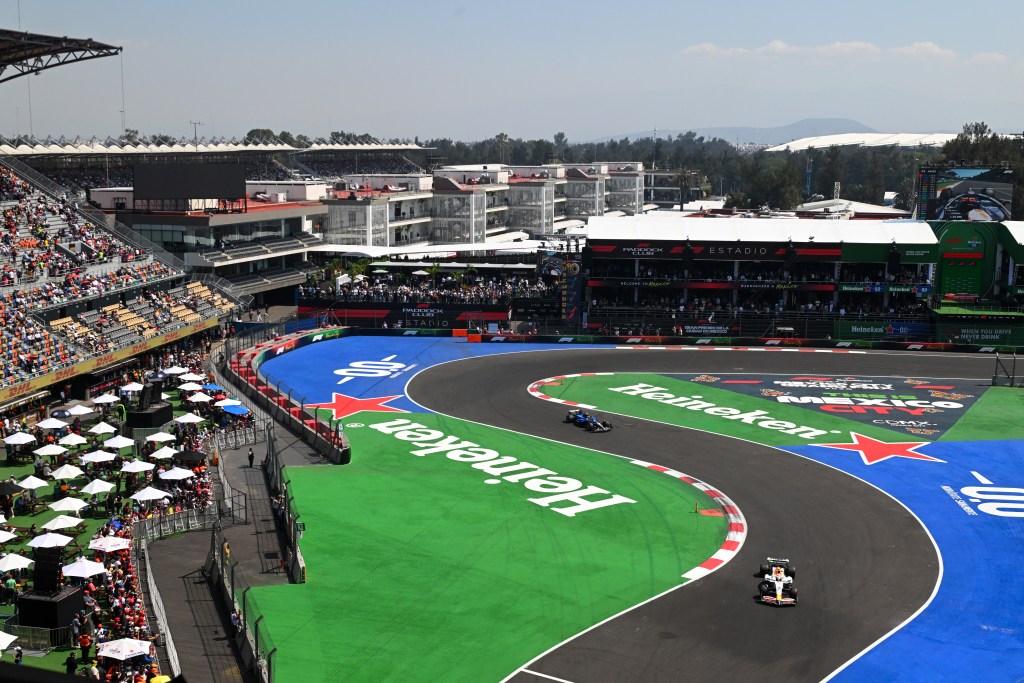
Corporación Interamericana de Entretenimiento (CIE), the operator of the Autódromo Hermanos Rodríguez, has committed an investment of 202 million pesos, equivalent to approximately 12 million US dollars, to a renovation and maintenance programme aimed at keeping Mexico City on the Formula 1 calendar. Works began on Monday 11 May and are focused entirely on retaining the FIA’s Grade 1 homologation (the highest certification required to host a Formula 1 Grand Prix), which demands circuits meet a specific set of technical and safety standards that evolve alongside the championship’s own regulation changes.
The layout of the circuit will not be modified. What is changing is everything around it. Works include resurfacing the track in targeted sectors, a complete overhaul of the drainage system, a new asphalt layer across the entire paddock zone and renovation of the pit building facade and facilities. The project is being carried out in collaboration with the FIA, OMDAI México and Tilke, the German engineering firm responsible for the circuit’s comprehensive redesign ahead of Formula 1’s return to Mexico in 2015.

The involvement of Tilke matters. The Stuttgart-based practice has designed or redesigned more Formula 1 circuits than any other firm in the sport’s history, and their presence signals that this is not a cosmetic refresh. Their brief is to bring the Autódromo into alignment with the technical demands of the 2026 regulatory era, where new power unit architecture and aerodynamic specifications place different loads on circuit infrastructure than the previous generation of cars.
Federico González Compeán, director of the Mexico City Grand Prix, was direct about the stakes involved. “This investment represents our commitment to preserving the Autódromo Hermanos Rodríguez as a world-class venue. Guaranteeing its international homologation and continuing to raise its technical standards is fundamental to ensuring Mexico remains part of the Formula 1 calendar for years to come.” The tone reflects a wider reality that organisers across the calendar understand. Holding a Formula 1 race is not a permanent arrangement. It is a contract renewed through performance, investment and relevance, and the competition for available dates grows every year.
Formula 1’s revenues reached 3.87 billion dollars in 2025, up 14 percent on the prior year, and new markets across Asia and the Middle East are investing heavily in infrastructure to compete for calendar slots. Mexico’s response is maintenance, consistency and results. The 2025 edition of the Grand Prix generated an economic impact of nearly 20 billion pesos for the country across race week alone, with tickets selling out on the first day they became available. A circuit that produces those numbers does not need to lobby for its place. But it does need to keep the infrastructure that makes them possible.
Works will be carried out intermittently to accommodate the Estadio GNP Seguros concert schedule, which shares the venue complex. The deadline is the Formula 1 Gran Premio de la Ciudad de México, scheduled for 30 October to 1 November. Mexico’s current contract with Formula 1 runs through 2028, with the stated ambition to extend beyond that date. The renovation is the clearest signal yet that the ambition is being backed with money. For a race that has never failed to sell out since its return to the calendar a decade ago, the foundations are being laid for another decade more.
Thumbnail: By courtesy of Pirelli