Newsletter Subscribe
Enter your email address below and subscribe to our newsletter

Oscar Piastri delivered the most revealing Friday of the 2026 season at Suzuka. The McLaren driver set the benchmark in the second practice session with a 1:30.133, edging Kimi Antonelli by just 92 thousandths of a second. But the result was only part of the story — the how behind the lap time says everything about the real pecking order in this new Formula 1 era.
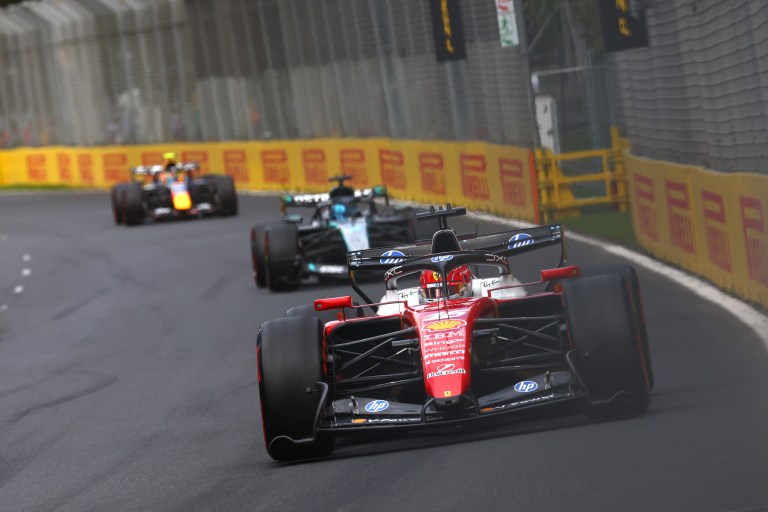
McLaren and Mercedes share the same power unit. Yet in Japan, they are deploying it in radically different ways. The MCL40 unleashed full battery power down the start-finish straight, building a significant advantage into Turn 1. Mercedes, by contrast, held back its deployment for the back straight between Spoon and 130R — the fast sweep in sector two — recovering ground through that section. The decisive moment came at the exit of the chicane: McLaren still had energy to push; Mercedes had already hit its recharge limit. Same lap times, completely opposite energy strategies. That asymmetry sets the stage for an unpredictable Sunday.
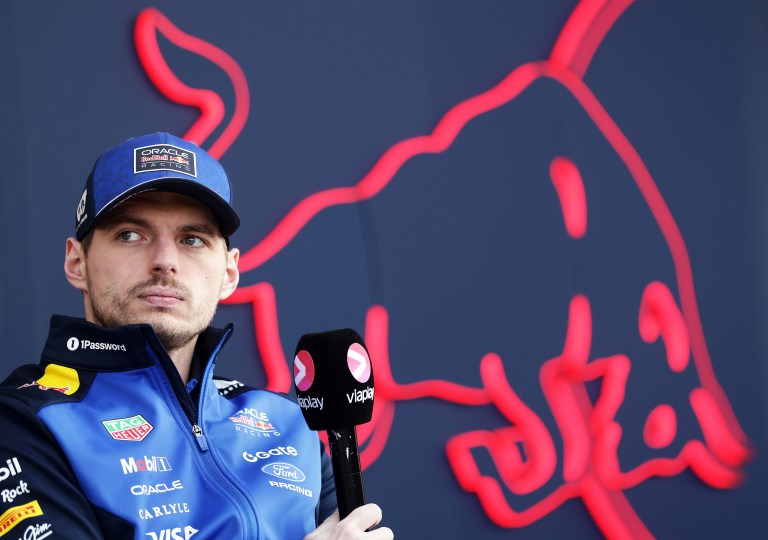
On the other side of the ledger: Verstappen. The four-time world champion had a brief scare in FP2 when his Red Bull completely lost power — the result of what he described as a “glitch” embedded in the 2026 engine architecture. When he slowed too much to let a car through on a flying lap, the engine dropped below a critical rev threshold, triggering a safety mode that cut power for 10 to 20 seconds before it returned. In a race scenario, that kind of freeze could cost far more than just positions.
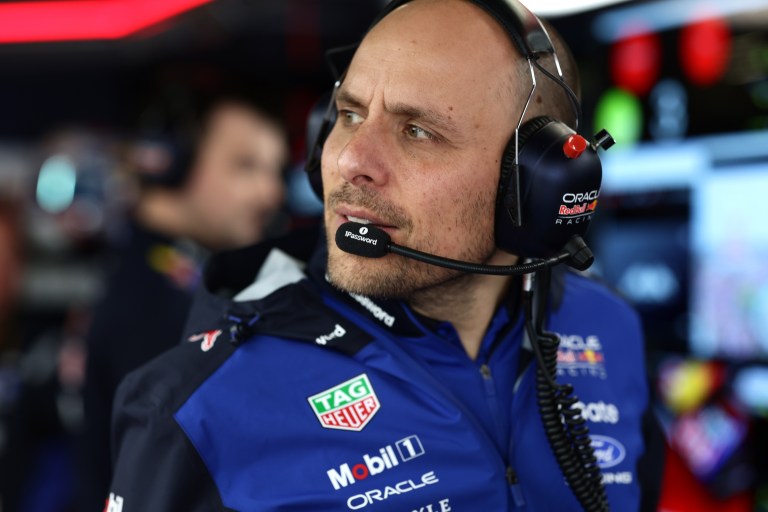
But Red Bull’s Suzuka problem runs deeper than that incident. For the second consecutive weekend, the RB22 cannot match the pace of the front-runners. The team tried opposite setup extremes — “we went from one extreme to the other,” Verstappen said — and neither worked. Sector 1, loaded with medium-to-high-speed corners, is where the Red Bull suffers most, apparently lacking the aerodynamic downforce (the pressure generated over the car to increase grip) that McLaren, Mercedes, and Ferrari carry with confidence. Chief engineer Paul Monaghan acknowledged the team had “identified a few things that are wrong,” but whether those can be corrected before qualifying remains an open question.
The 2026 technical regulations are also reshaping Suzuka itself. The circuit has never sounded quite like this. Stretches where drivers once pushed to the limit — the approach to the Esses, the braking zone into Degner 1, the long run from 130R to the chicane — have become energy harvesting phases, where the car recharges its battery by using the engine’s resistance as a generator. The FIA reduced the maximum harvest limit from 9 to 8 MJ to try to smooth the effect, and it has helped to a degree. Carlos Sainz acknowledged that Suzuka was “a step in the right direction,” but made no attempt to sugarcoat it: “It’s not what F1 should be. It needs to get better.”
In the midfield, the contrasts are sharp. Alpine arrived in Japan carrying an unresolved technical weakness: its A526 generates excessive understeer (the car’s tendency to run wide rather than rotate through a corner) in high-speed sections — a flaw that China’s slower layout had masked. Suzuka exposed it fully. Williams, meanwhile, impressed on a single lap — Albon finished eighth in FP2 — but still struggles in long-run pace, compounded by a car already carrying excess weight. And Cadillac, enjoying their smoothest weekend since arriving in F1, debuted their first meaningful upgrade: a revised diffuser that Valtteri Bottas described as adding “more load and stability.” Engineering consultant Pat Symonds said he was “reasonably hopeful” that further performance gains would follow in the coming races.
Suzuka reveals its hand early. Friday in Japan delivered a clear message: McLaren is back in contention, Red Bull has no answers yet, and the energy game may well decide Sunday before the first braking zone.
Thumbnail: By courtesy of Pirelli