Newsletter Subscribe
Enter your email address below and subscribe to our newsletter

Aston Martin’s struggles push the Canadian toward GT racing, where winning feels achievable again.
In the middle of a calendar break, Lance Stroll’s decision to race outside Formula 1 is no coincidence. The Aston Martin driver has openly admitted that the team’s lack of competitiveness in 2026 directly influenced his entry into the GT World Challenge Europe, a series where victory suddenly feels within reach.
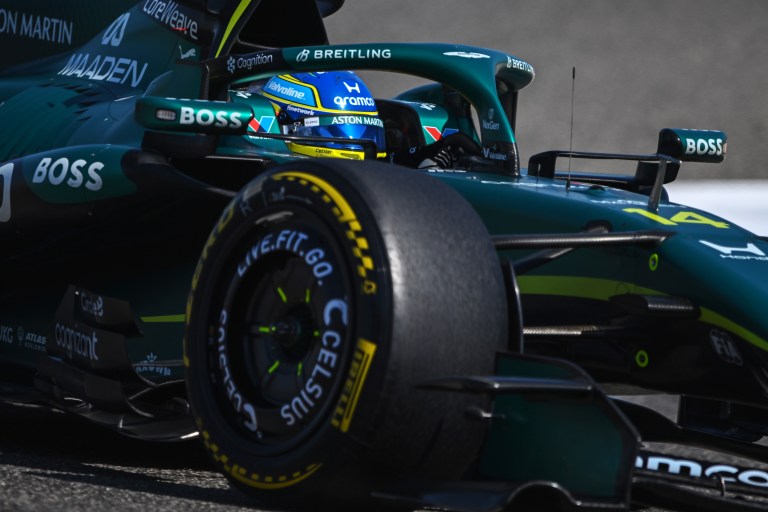
Context matters. Aston Martin is facing a difficult start to the season, defined by performance and reliability issues, despite major investment and high-profile signings. After three races, Stroll has yet to secure a classified finish, while teammate Fernando Alonso has not scored a single point. The project remains unstable in its current phase.
Faced with that reality, Stroll chose a change of environment. He will race this weekend at Paul Ricard in an Aston Martin Vantage GT3 Evo, alongside Roberto Merhi and Mari Boya. The idea was formed quickly during the Japanese Grand Prix, evolving from casual conversations into a confirmed plan within days.
“This year we don’t have a very competitive car, and we have a break in the calendar. It was a chance to change mindset,” Stroll explained. More than an escape, the move reflects a deliberate search for competitive fulfillment that F1 currently cannot provide him.
The contrast between categories is stark. In modern Formula 1, winning is heavily dictated by technical hierarchy, while GT racing offers a broader competitive window shaped by execution, strategy, and balance. For Stroll, that difference is decisive.
“In F1, you don’t always have the opportunity to win. Here, if everything comes together, it’s possible,” he said. That statement captures both his motivation and a wider reality: the competitive ceiling in F1 is structurally limited for much of the grid.
This will be only his third major endurance outing, following previous appearances at the Daytona 24 Hours. But the meaning is different this time. It’s not about gaining experience, it’s about reconnecting with the possibility of winning.
The broader context reinforces the trend. More F1 drivers are exploring GT racing as an alternative competitive outlet, with Max Verstappen among the most visible examples. Stroll even discussed his plans with the Dutch driver during the Suzuka weekend.
Beyond the result, the message is clear. When an F1 driver seeks competition elsewhere to feel capable of winning, it reflects more than personal ambition. It speaks to the competitive reality of his team and, indirectly, the structure of the championship itself.
For Stroll, the goal is simple: race and enjoy. But the underlying narrative is far more significant.
Thumbnail credits: © Marco Canoniero | Dreamstime.com