Newsletter Subscribe
Enter your email address below and subscribe to our newsletter

Some races are best understood through numbers. Others are best understood through lines. The 2026 Australian Grand Prix, the opening round of Formula 1’s most ambitious regulatory overhaul in years, belongs firmly to the latter. The position chart exposes a race far more complex than the final classification suggests.

The lap-by-lap position chart tells, in colored traces, everything that mattered at Albert Park: the boldness of a strategy call, the relentlessness of a recovery drive, and the precise moment a race was decided before most people in the paddock had noticed.
If there is a single instant that defines this Grand Prix, it is Isack Hadjar’s retirement. The Red Bull debutant, who had qualified third and was running a composed fourth, stops on track before completing Lap 12. On the chart, his dashed line simply vanishes, cut off cleanly in the middle of the graph.
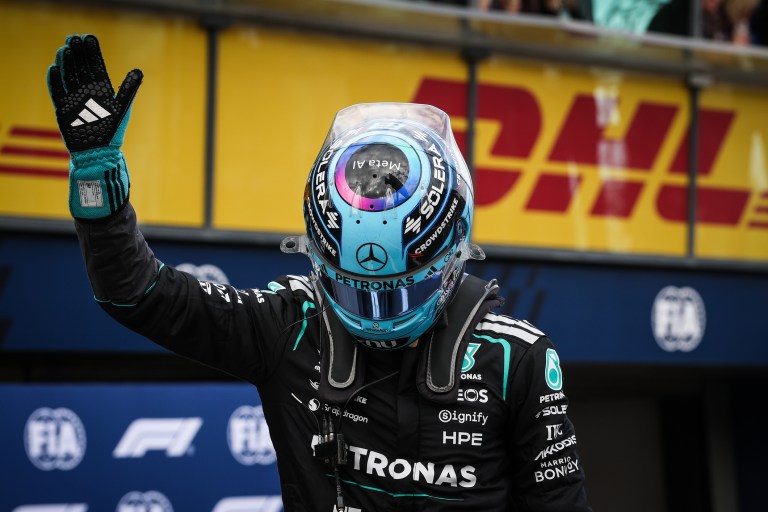
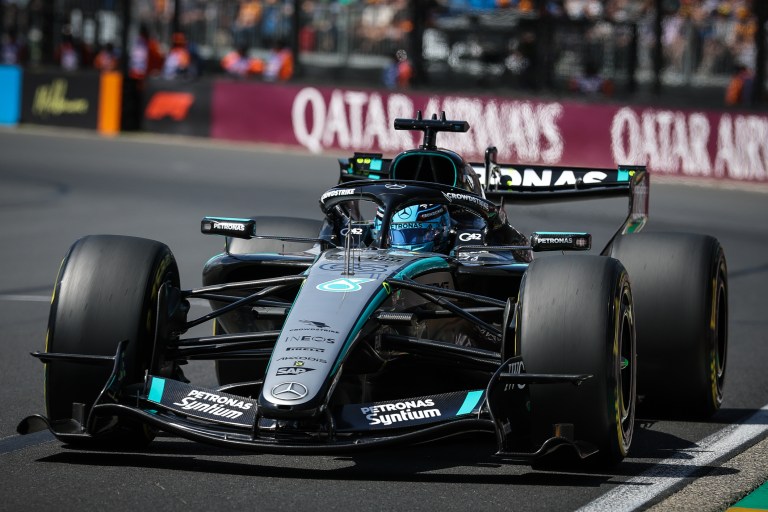
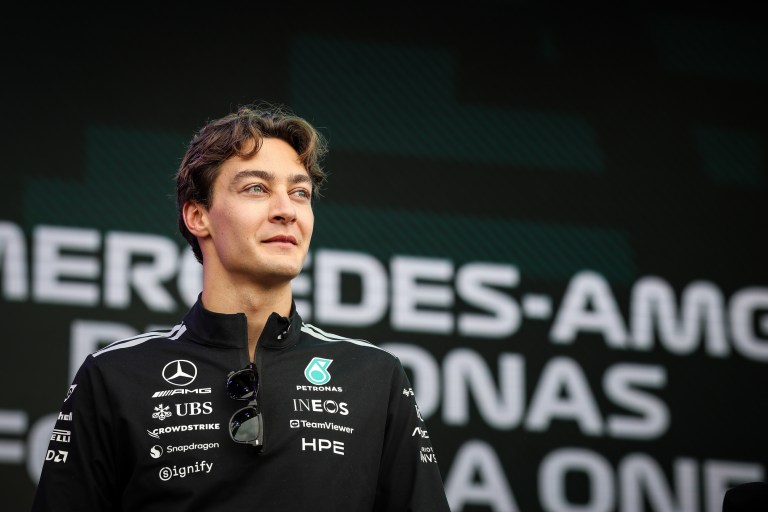
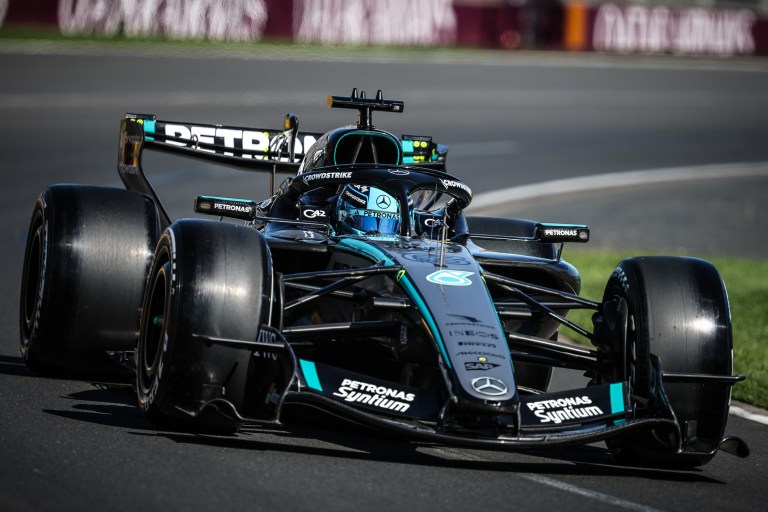
That retirement triggers the first Virtual Safety Car of the afternoon. Mercedes react immediately, bringing both Russell and Antonelli into the pits. Ferrari do not. Leclerc and Hamilton stay out on medium tires that are already accumulating laps.
What follows is the story of the race. When the Ferraris eventually pit, they rejoin behind both Silver Arrows with fresher rubber but time already lost. Russell’s line, which in the opening phase had danced up and down in a genuine fight with Leclerc, settles at first place from Lap 15 onwards and never moves again. Flat. Untouchable. All the way to Lap 58
The richest individual story in the chart belongs to Charles Leclerc. From fourth on the grid,
his red line climbs to the race lead before the first lap is complete, the visual image of a
launch so clean it caught even the most informed observers by surprise.
For the next ten to twelve laps, the lines of Russell and Leclerc cross each other repeatedly.
It is the race within the race: the British polesitter and the Monegasque exchanging the lead
in cars that were still finding their limits under a brand new set of regulations. Russell
described it afterwards as “mega”.
But after the VSC, Leclerc’s line begins a drift that is barely perceptible at first and
unmistakable by the end. Third place. More than fifteen seconds behind the winner. The
strategy did not match the driver.
No line on the chart is more eloquent than Max Verstappen’s blue trace. It begins at position 20, at the very bottom of the vertical axis, after his Red Bull made contact with the barriers in Q1 without recording a single timed lap. The only direction available was up.
And up it went, without pause and without concession. Lap after lap, the blue line climbs through the field with a consistency that becomes more striking the longer you look at it. By the halfway point of the race it had already crossed into the top ten. In the closing laps it was closing on Norris for fifth, the gap between the two lines narrowing with each pass of the start-finish line.
He finished sixth. Fourteen positions gained across 58 laps, the largest net gain of any classified finisher in Melbourne. It is the kind of performance that data records with cold precision and the human eye remembers with something closer to admiration.
Melbourne has always had a gift for setting the tone. In 2026, it set more than that. It drew the first lines of what could become the defining story of a season: Mercedes with the strategic nerve, Ferrari with the raw speed and the questions to answer, and Verstappen reminding everyone, from the very back of the grid, that the competitive order in this new era is far from written. The chart captured it all. Fifty-eight laps. Twenty drivers. One very long season just getting started.
Thumbnail credits: © Filedimage | Dreamstime.com