Newsletter Subscribe
Enter your email address below and subscribe to our newsletter

At 5.807 kilometres, 18 corners, and a figure-of-eight layout that makes it the only track on the calendar to cross over itself, the Japanese Grand Prix this weekend delivers one of the most demanding examinations of the season for drivers, engineers, and strategists alike.

This circuit’s story did not begin in the Formula 1 paddock — it was built by Honda as a dedicated test facility for the Japanese manufacturer. Decades later, it has become the setting for some of the sport’s most defining moments: from the legendary battles between Alain Prost and Ayrton Senna to multiple title-deciding showdowns etched into the collective memory of motorsport.
What makes Suzuka exceptional is the rare combination of skills it demands. The opening sector, defined by the iconic S-curves, is driven almost entirely on feel, with no visual reference points from Turn 2 through Turn 7. The driver must balance the car at the absolute limit of grip with nothing but instinct to guide them. The Degners — two chained corners with a sting in the tail — punish any excess of entry speed: carry too much into Degner 1 and stopping for Degner 2 becomes near impossible.

Then comes 130R, the legendary high-speed left-hander that is typically taken flat out and has been the stage for some of the most audacious overtaking manoeuvres in Formula 1 history. The lap closes with the chicane — a tight, punishing sequence that demands maximum braking precision — before drivers are funnelled back onto the start/finish straight.
The lap record belongs to Kimi Antonelli, set in 2025 at 1m 30.965s — a benchmark that underlines the performance ceiling this circuit demands in the current era.
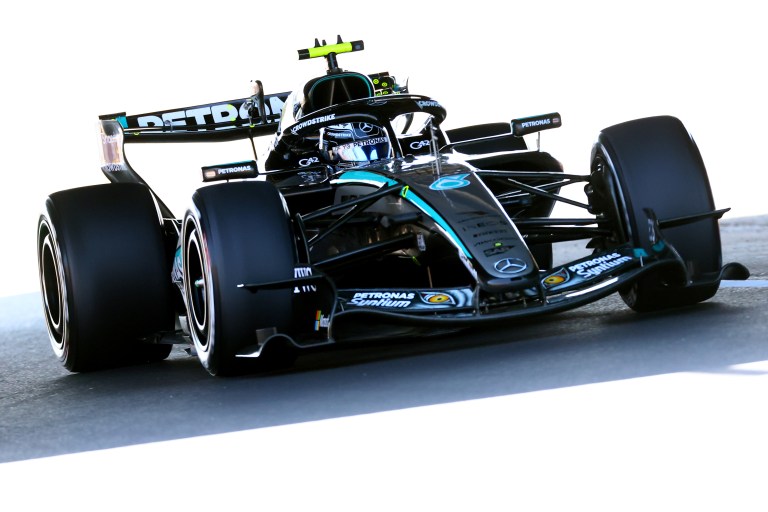
On the aerodynamic side, Suzuka will feature two Straight Mode zones — the system replacing DRS that simultaneously adjusts both the rear and front wings to reduce aerodynamic drag (drag, the air resistance that slows the car on straights) — one along the start/finish straight and another between Turns 14 and 15. The Overtake Mode detection point — the system that allows a driver to recover an additional 0.5 MJ of electrical energy to attack the car ahead — is placed at Turn 17, the penultimate corner, setting up the main straight as the prime attacking zone.
With eight pole positions, nine podiums and six victories, Michael Schumacher remains the most dominant driver in Suzuka’s history. But the man of the moment is Max Verstappen, who arrives with the chance to extend his Japanese Grand Prix winning streak to five consecutive years. Only eight of the last twelve races held here have been won from pole, leaving the strategic equation wide open.
Suzuka has everything a driver could want — and everything they should fear.
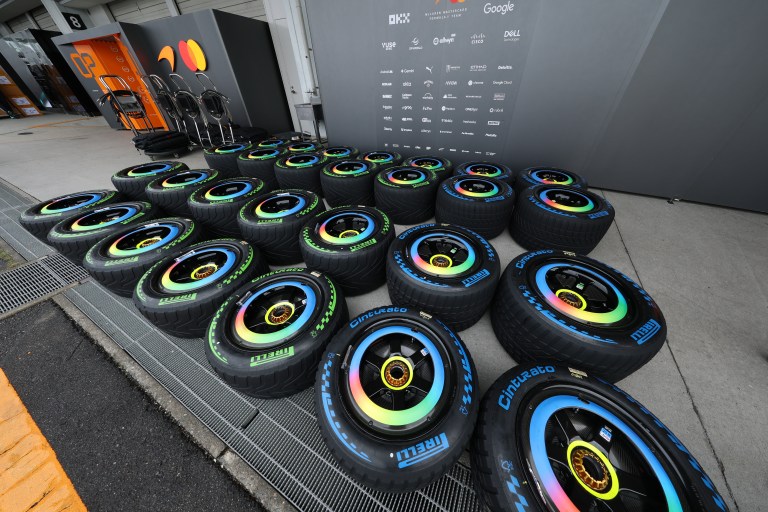
Thumbnail: By courtesy of Pirelli