Newsletter Subscribe
Enter your email address below and subscribe to our newsletter

While the paddock processes a season-opening stretch defined by technical friction, Formula 1 already has a set of concrete measures on the table to address the problems that have shaped the first three races of 2026.
The F1 Commission, the manufacturers, and the FIA have scheduled a series of dedicated meetings ahead of the Miami Grand Prix to assess the real competitive impact of power unit energy management — and what, if anything, can be done about it before the situation worsens.
The diagnosis is not new, but it now has a clear face. Super clipping — the electronic system managed by each power unit’s software algorithms that cuts power output in favor of battery recharging — has been identified by drivers and analysts alike as the single biggest distortion to on-track competition, particularly in qualifying. In races, the consequences have already become tangible: the incident between Oliver Bearman and Franco Colapinto, triggered by the speed differential between a car in recharging mode and one in full energy deployment, exposed a safety risk that can no longer be treated as a side effect.
The most immediate corrective lever is a further reduction in the megajoules (MJ) recoverable per lap. Cutting the current limit to 5 MJ — within the existing regulatory framework — would eliminate clipping on straights without requiring a fundamental redesign of the current power unit architecture. Alongside that, the use of fuels with a higher calorific value — fuels that generate more energy per unit burned — could partially offset the reduction in electrical output by allowing a modest increase in internal combustion engine power. A slight increase in turbocharger pressure (the system that compresses intake air to boost engine output) is also under consideration, though its implications for reliability make it a more complex short-term proposition.
What is not on the table is implementing all these measures simultaneously. The technical assessment is clear: the most practical combination for the remainder of the 2026 season would pair a higher-calorific fuel with a reduction in recoverable MJ — a surgical recalibration that does not require rebuilding engines, but does require the willingness to act quickly.
The longer-term solution goes further. Shifting the current power split between the electric motor and the internal combustion engine — presently 50:50 — toward a 60:40 ratio in favor of combustion would reduce battery dependency without abandoning the sustainability principles that underpinned the regulation’s original design. The battery would remain a meaningful performance variable; it would simply cease to be the factor that dictates how every corner is driven.
F1 knows what needs to be done. Whether the system — manufacturers, FIA, teams — can move at the speed the problem demands is an entirely different question.
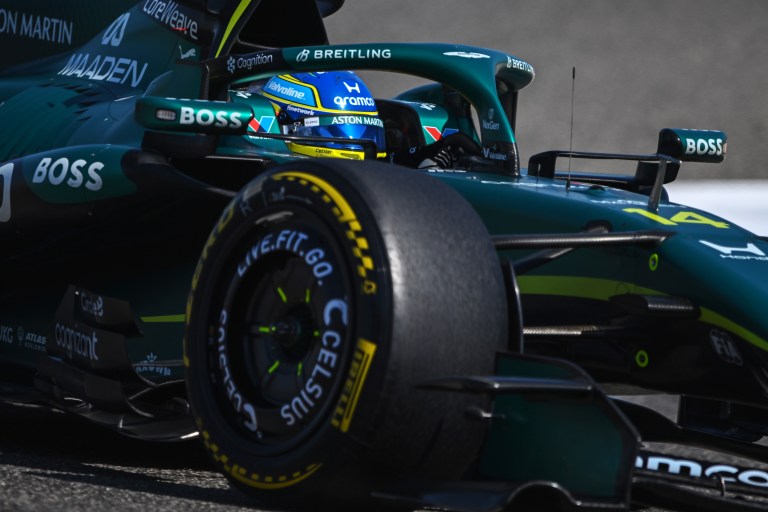
Thumbnail credit: By courtesy of Pirelli