Newsletter Subscribe
Enter your email address below and subscribe to our newsletter

Three races into the most technically ambitious regulatory overhaul in Formula 1’s modern era, the sport’s governing body and its key commercial stakeholders are convening in London this Thursday to confront an uncomfortable reality: the 2026 power unit regulations, as currently written, are undermining the very spectacle they were designed to elevate.
The meeting is the first in a formal sequence of discussions aimed at refining the energy deployment framework (the set of rules that governs how and when the hybrid power unit releases electrical energy to the rear axle) before the Miami Grand Prix in May. It is a technical forum, not a decision-making session — the actual vote won’t happen until April 20 — but its outcome will set the agenda for whatever regulatory adjustments follow.
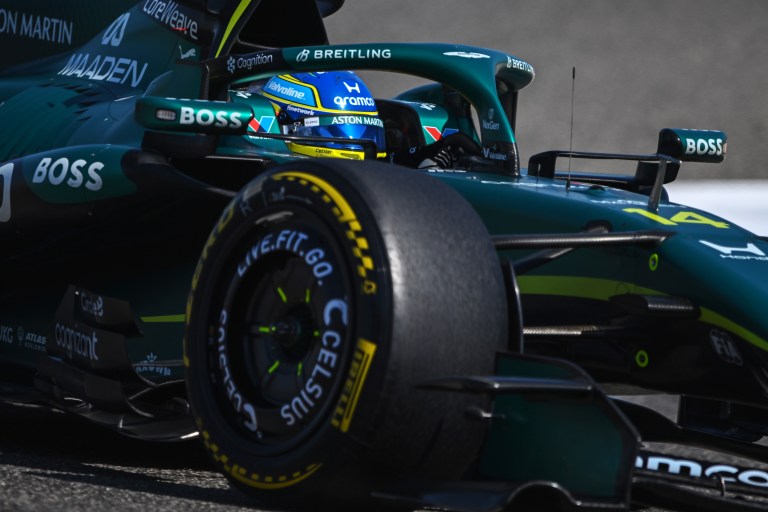
The core problem sits squarely in qualifying. What should be the purest expression of driver talent across a single lap has instead become a contest dominated by power unit algorithms (pre-programmed software sequences that control energy recovery and deployment automatically), which penalize drivers for pushing hard through faster corners. The physics are unforgiving: attacking a high-speed section drains the battery faster, leaving less electrical power available for the following straight. The result is cars visibly lifting and coasting even on their hottest qualifying laps, and drivers deliberately surrendering speed through technical sections to preserve charge. The paddock’s reaction has been near-unanimous.
Oliver Bearman’s 50G crash at Suzuka added a harder edge to the conversation. McLaren team principal Andrea Stella had flagged dangerous closing speeds — the rate at which a faster car catches a slower one — well before the season began, but two largely incident-free weekends in Melbourne and Shanghai had allowed the concern to recede. Japan changed that calculus. The impact reignited a safety debate that the FIA cannot treat as secondary; the governing body retains the authority to push through rule changes unilaterally on safety grounds, bypassing the usual team consensus mechanisms. That option remains on the table, though the current indication is that broader agreement may be reachable without forcing the issue.
Thursday’s technical experts — drawn from the teams and power unit manufacturers — will be tasked with producing specific, concrete proposals. The most likely direction involves reducing the electrical energy component in qualifying, or restructuring the conditions under which the battery can be recharged mid-lap. A follow-up meeting on April 20 will widen the group to include F1 commercial leadership and team representatives, conclude with an electronic vote, and set the parameters for what gets trialed from Miami onwards. Data collected across subsequent race weekends will then inform whether a second round of adjustments is needed before the summer break.
Anyone expecting structural surgery on the regulations will leave disappointed. Hardware changes are off the table — the engineering lead times make that impossible — and every team and manufacturer has invested enormous resources optimizing around the existing framework. The wider philosophical question of how much of an F1 lap should remain in the driver’s hands, and how much should be governed by software logic, is real and worth having. But it is not Thursday’s agenda. That conversation, for now, belongs to another day.
Thumbnail credits: © Filedimage | Dreamstime.com