Newsletter Subscribe
Enter your email address below and subscribe to our newsletter

Two near-certain results have already gone up in smoke this season, and Toto Wolff knows the fastest car on the grid counts for nothing if it keeps switching itself off.
Mercedes lead both championships and have the quickest car in Formula 1. They are also the team that has thrown away more points than anyone, and the pattern is starting to look like more than bad luck.
Start with the numbers that should be bigger. Kimi Antonelli leads the drivers’ standings by 41 points and Mercedes head the constructors’ by 72, and on raw pace both margins ought to be wider. By The Race’s calculations, no front-running team has lost more to mechanical failure this year than Mercedes, whose two big retirements alone are reckoned to have cost around 43 points. Ferrari, by contrast, have lost a fraction of that. The dominant team is also the one quietly handing its rivals a lifeline.
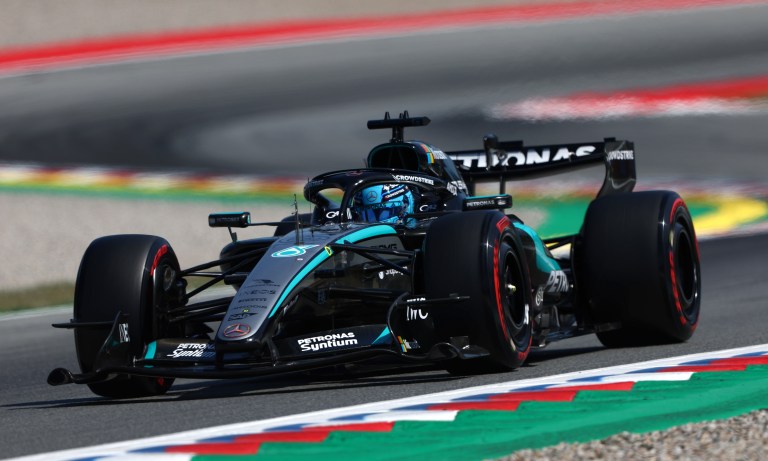
Two failures did most of the damage. George Russell was leading in Canada when his car simply switched off. Three races later in Barcelona, Antonelli had just passed Russell for second when his W17 did the same thing in the closing laps. “The car just gave up,” the teenager said afterwards, and with it went a near-certain podium. Toto Wolff totted up the cost without flinching: 25 points lost in Montreal, another 18 in Spain.
His diagnosis was blunt. “In order to finish first, first you have to finish,” the Mercedes principal said, adding that no team can chase a championship while a car keeps shedding big points every other weekend. Coming from the man whose drivers have otherwise won almost everything in sight, it read less as a complaint than a warning.
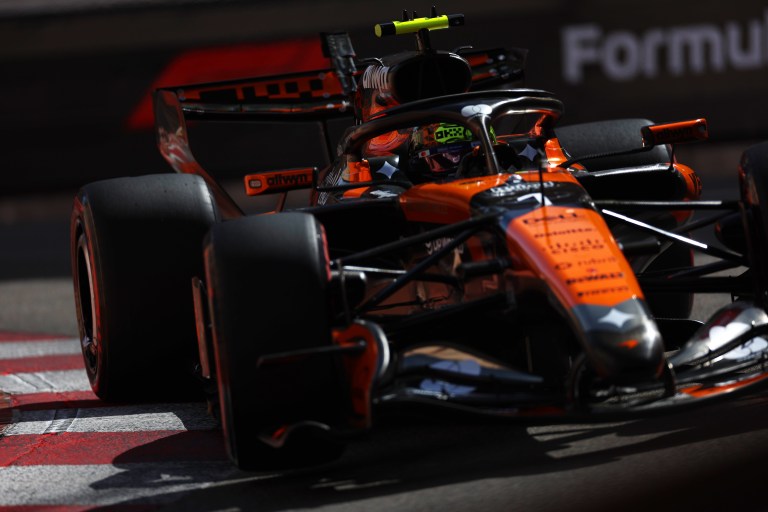
What makes it serious is the common thread. Both retirements are understood to trace back to high-voltage battery failures in the all-new 2026 power unit, the hybrid system (which stores and redeploys electrical energy) that this rules era leans on more heavily than ever. And the trouble is not confined to the works cars. Mercedes-powered McLaren lost both its drivers before the start in China to separate electrical issues, Lando Norris needed a battery change at Monaco, and Alpine and Williams have had their own niggles. When a fault appears across an engine manufacturer’s customers as well as its factory team, it stops looking like coincidence.
Worse, Mercedes cannot fix quickly what it has not yet fully diagnosed. A proper teardown of Russell’s Montreal failure has barely begun, partly because the battery in question spent weeks in transit on sea freight, working its way back to Brackley long after the event. Until the root cause is pinned down, every weekend carries the same quiet risk.
For the first six rounds, that risk felt academic, swallowed by a lead so large it looked decorative. Ferrari’s Barcelona upgrade changed the arithmetic. With the field tightening at the front, a single retirement now costs far more than it did in March, and as Wolff acknowledged, one DNF (a did-not-finish) can swing 25 points and crack the title race wide open.
None of this is about speed. The W17 remains the class of the grid, unbeaten for pole position and quickest on most Sundays. The question is narrower, and more dangerous, than anything Ferrari can throw at them: can Mercedes get its own car to the flag? If the answer keeps coming back no, leads of 41 and 72 points will not feel comfortable for long, and the most dominant team of the new era will have been beaten by nobody but itself.
Thumbnail: By courtesy of Pirelli