Newsletter Subscribe
Enter your email address below and subscribe to our newsletter

The selection of the toughest compounds in the 2026 range creates a strategic scenario driven by new asphalt, low grip and thermal tyre behavior.
The 2026 Japanese Grand Prix is shaping up to be a test of tyre management rather than outright speed. Pirelli’s decision to bring the three hardest compounds in its 2026 range —C1, C2 and C3— reflects Suzuka’s demands, while introducing a strategic variable that could define the race from qualifying.
Suzuka’s layout, with its continuous direction changes and high-speed corners, places extreme loads on tyres. The combination of lateral forces and speed makes it one of the most demanding circuits on the calendar for degradation, forcing teams to prioritize consistency over peak performance.
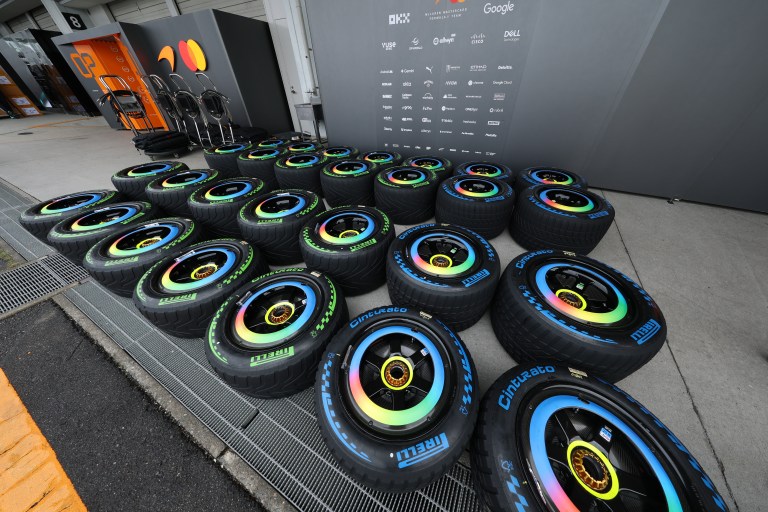
Each driver will receive a fixed allocation: two sets of hard (C1), three medium (C2) and eight soft (C3), alongside intermediate (wet conditions) and full wet tyres (heavy rain). A key rule applies: all drivers must use at least two slick compounds (dry-weather tyres with no tread) during the race, conditions permitting.
The introduction of the C1 —the hardest compound— marks its first appearance this season, having not been used in the opening rounds. That alone adds uncertainty regarding its real performance under race conditions.
Track conditions further complicate the picture. Suzuka’s extensive resurfacing has created a smoother but initially low-grip surface, increasing the likelihood of graining (the formation of small surface irregularities on the tyre that reduce performance).
This effect is expected to be more visible on the softest compound. The C3 may show early degradation on the front axle, although track evolution (progressive grip increase as rubber builds up) could stabilize performance over the weekend.
Temperature will also play a decisive role. With ambient conditions potentially similar or lower than last year, thermal degradation (performance loss caused by overheating tyres) could remain limited, opening the door to more conservative strategies.
Under these conditions, a one-stop race is possible, but will depend heavily on the extent of graining and its impact on pace. The key will be bringing tyres into the optimal operating window (ideal temperature and performance range) from qualifying.
The 2026 Japanese Grand Prix will not be decided by pace alone — it will be shaped by how teams manage every tyre decision from the first lap.
Thumbnail credits: © Erman Gunes | Dreamstime.com